
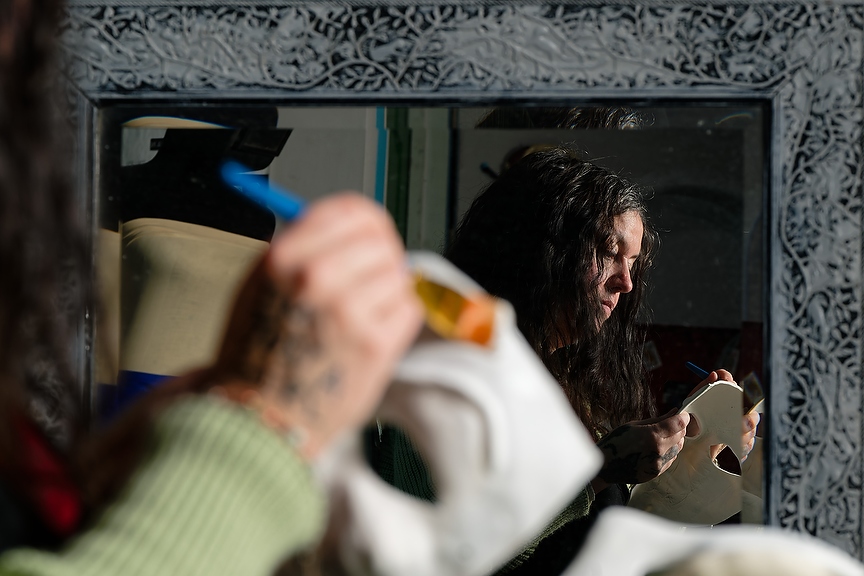
Creativity exists in everyone.
Every single person has it.
Some people consider themselves artists, others don’t, but still, creativity is in you.
Your creativity could come into existence through a paintbrush, a camera lens, words on a page, or in a conversation with a friend or a stranger.
It’s a solution to a problem in life, finding an alternative route to work, in mechanics, visualizing a problem and figuring out a solution, or simply finding joy in cooking and creating delicious meals.
It pops up all the time, and you don’t even realize it.
“To create is to bring something into existence that wasn’t there before,” is how music producer Rick Rubin describes it in his book The Creative Act.
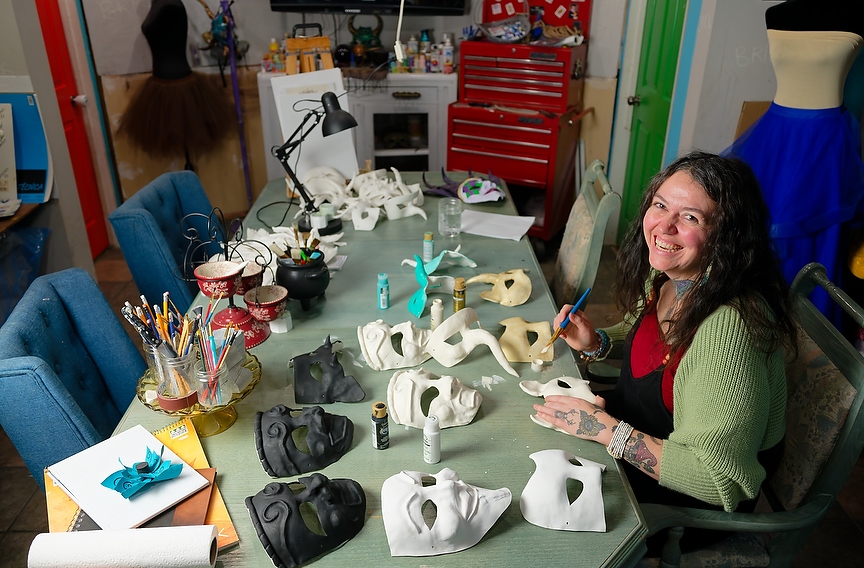
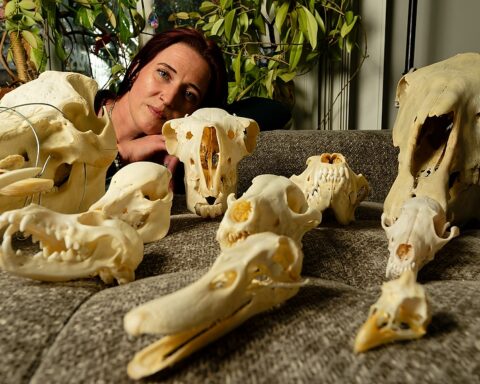
Grande Prairie artist Juanita “Moth” Jordan believes that “Everyone’s an artist.”
She said everyone is creative and works to create something, and doesn’t even realize that the act of creation itself is art.
“How they are making it is art,” said Jordan.
“I like to make masks because I feel everyone’s wearing them.
“I also love to make masks for people to paint and decorate, because it really shows who they are, it shows a piece of them.”
She said in the end, they are drawn to specific masks because of their own beliefs and ideas, and when given a chance to create, “they come up with these wild ideas.”
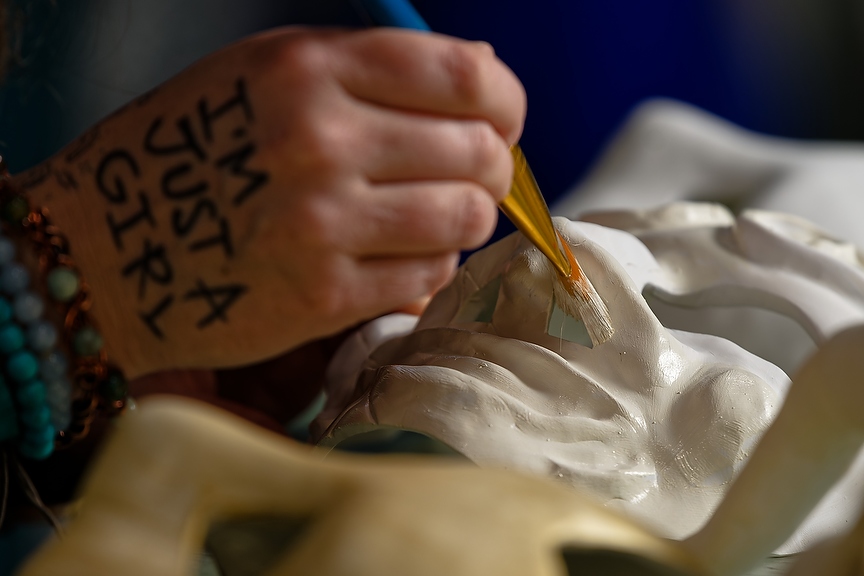
Creative slumps
Artists will often embrace their creative sides but rarely talk about the fear of losing their creative spark, the shame of stopping their creative outlet for a time, and then returning after a break.
We can often call it a break, writer’s block, a creative standstill, burnout, a mental block, or just a general creative slump.
“I think sometimes people mistake inactivity with the loss of creativity, and I don’t think that’s the case at all,” said Greg Gerla, a creativity instructor and photographer based in Calgary.
“I think it’s a healthy thing not to feel the need to be creative, to output all the time.”
Gerla and his business partner and fellow photographer, Greg Fulmes, InSight Creative Workshops, hosted their Create(ivity) workshop in October with the Grande Prairie Photography Club.
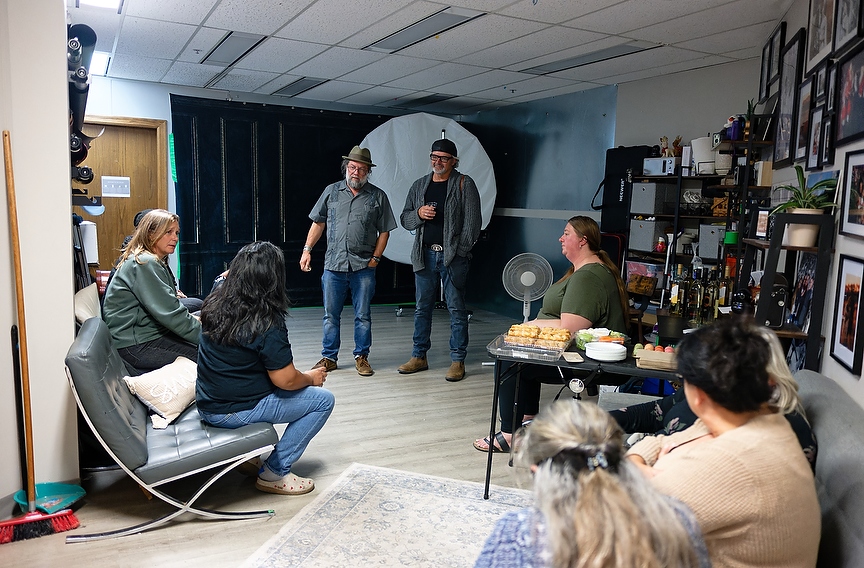
The duo have been sharing their creative process with artists and non-artists alike.
Fulmes noted that when in Grande Prairie, a photo club member said they had not taken a photograph in months, yet during the workshop, they created some fantastic work.
“It’s crucial to be able to step back, jump out of that fast lane for a bit, either regroup or just rest those brain cells, but if you don’t do that, you burn out,” said Gerla.
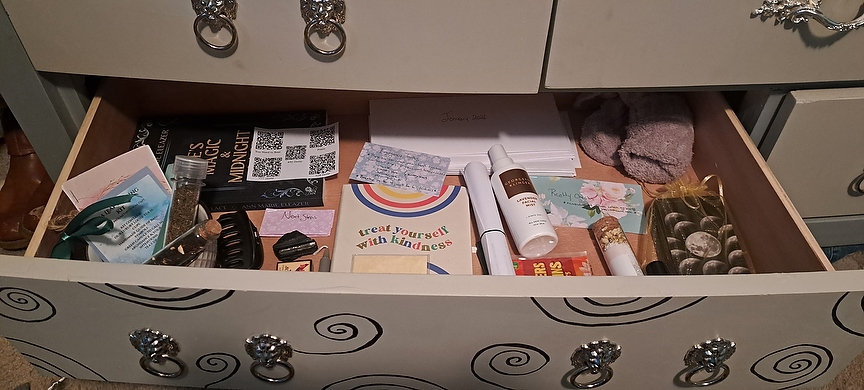
Jordan has created what she calls her spiral drawer reset.
“It’s full of things for me.”
Her drawer is full of items that help her refocus: scents of lavender help ground her, QR codes link to sounds she likes, such as the sound of rain, and it includes notes to herself.
“If I am overwhelmed by something, that’s where I go to, and then I go on the treadmill for like 30 minutes, I light incense, and I watch a comfort show, and it starts to get your body ready to do something,” said Jordan.
Finding our creativity
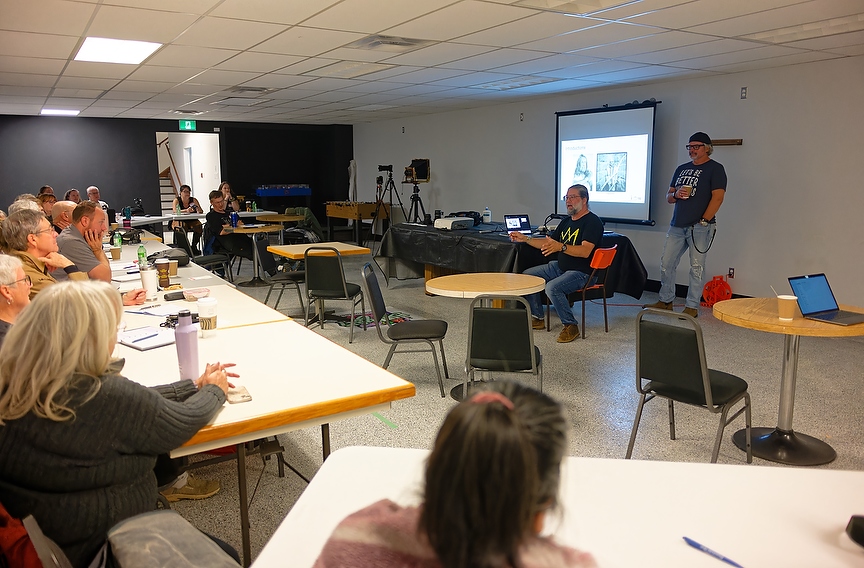
“Creativity is a fickle mistress, and that it’s, for me, one of those things that you can’t chase it,” said Gerla.
“You can’t actively seek out creativity; you have to let it come to you.”
The Creative Act discusses the need to be bored and to allow creativity to come to you at different times.
“When we reach an impasse at any point in the creative process, it can be helpful to step away from the project to create space and allow a solution to appear,” reads Rubin’s book.
He notes that the solution to creative blocks can sometimes be to just go and do another task: driving, walking, or swimming, and letting the idea access different parts of our brains to allow us to come up with a solution.
“Distraction is not procrastination.
“Procrastination consistently undermines our ability to make things. Distraction is a strategy in service of the work.”
Fulmes and Gerla often go for photo walks together and break their routines.
“I think that routine is the killer of creativity,” said Fulmes.
He said the duo will leave their studio and take new routes to see where they end up to help spark their creativity.
Although every walk may not result in the creative spark they hope for, Fulmes says it’s important to enjoy the walk itself and let one’s mind wander.
“I enjoy being bored because I think.”
Create for you
“Another killer of creativity is trying to please others, instead of just pleasing yourself, and don’t worry about what anybody else thinks, just make the shit you want to make,” said Fulmes.
Gerla noted that passionate people create trends, yet they often get lambasted for being the first.
“You think of Picasso and cubism, he was lambasted when he came out with that, or any of those that became popular trends started out with a trend being ridiculed,” said Gerla.
In an interview in director Michael Apted’s film Inspirations, David Bowie talks about creating for oneself.
“Never play to the gallery, but you never learn that until much later on.
“Never work for other people at what you do; always remember that the reason you initially started working was that there was something inside yourself that you felt that if you could manifest it in some way, you would understand more about yourself and how you coexist with the rest of society.
“I think it’s terribly dangerous for an artist to fulfil other people’s expectations. I think they’ll produce their worst work when they do that.”
Jordan said she will take breaks to work on her own personal projects when she begins to feel overwhelmed by a project.
“When I’m getting overwhelmed, I just create something for myself instead.
“I have a painting that I’m starting to work on just for myself, nothing other than just playing around and remembering that art is playing and not just for shows and other people.”
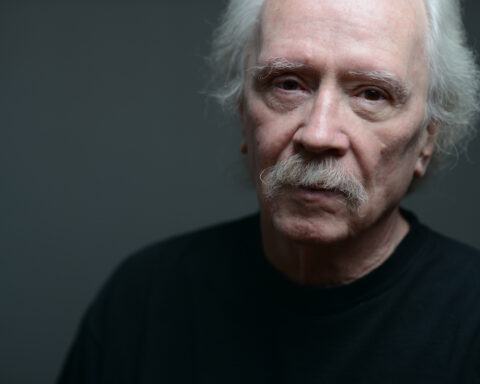
In 2005, the late filmmaker David Lynch was asked about creating films that people say don’t make sense.
“I like a story that’s got some concrete structure, but also holds abstractions,” he began his reply.
He then went on to note that while some films may explain themselves completely, his films allow people to find their own interpretation of them. In turn, every screening of his film can be different for every viewer.
Come together
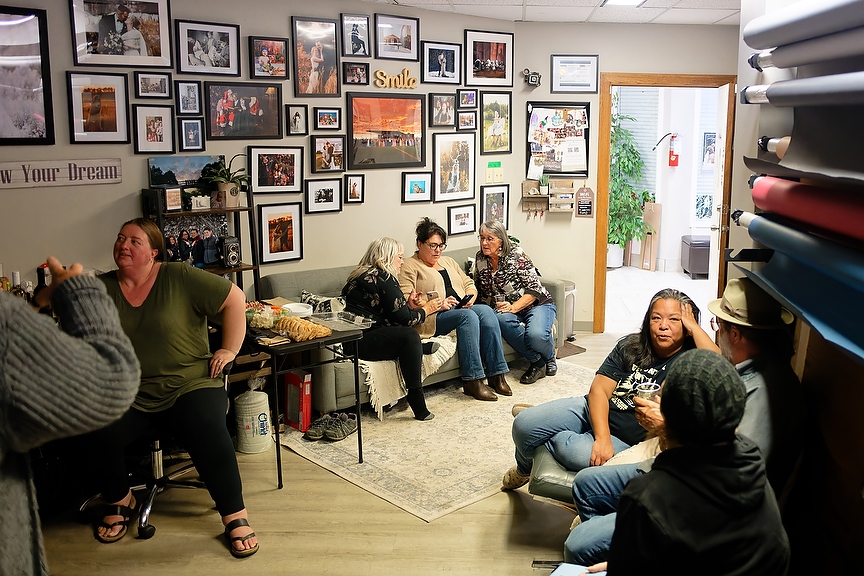
Fulmes encourages people to get together with those who inspire them to meet and talk about what they’re both working on.
That’s been happening at M3M Studios in Grande Prairie, where the studio has hosted creative mixers for local artists, business owners, podcasters, and other creatives.
The regular mixers have created an atmosphere where people from different backgrounds can interact and discuss their craft.
Gerla says that historically, it was common for artists to get together, share ideas, and argue, but ultimately, it fed their creativity.
“Creativity, although it’s an individual action, I think the impetus for the action has to be through congregation, through meeting people and talking, listening to what they say, and talking about your work and talking about their work, and all of that stuff is this pot where that creativity brews,” said Gerla.
Self-doubt
Speaking with artists, everyone has experienced some manner of self-doubt.
It’s easy to compare yourself to other artists and where they are in their journey compared to yourself.
Fulmes said that in his career as a photojournalist, he photographed many successful people, all of whom had failed at some point.
“They just kept doing it and doing it until they hit success, so don’t ever be afraid of failure,” he said.
“There isn’t such a thing as the most outstanding pianist, of any time, of anyone, nor anything.
“Nothing in art can be the best; it is only different.”
If you’re stuck in a creative rut, remember that it’s part of the process and that struggles exist everywhere and are normal.
“I would rather have the struggle of the artist than the struggle of the office worker, because there is going to be struggles with both,” said Gerla.





Follow Us