
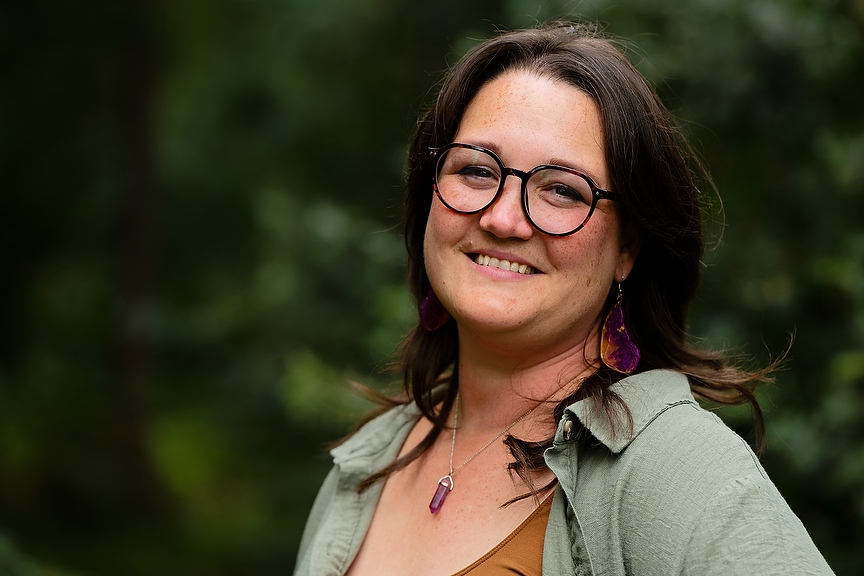
From the horror tales of ancient Greece to modern slasher and horror movies, Carolyn Gerk’s work explores what makes us scared and keeps us coming back.
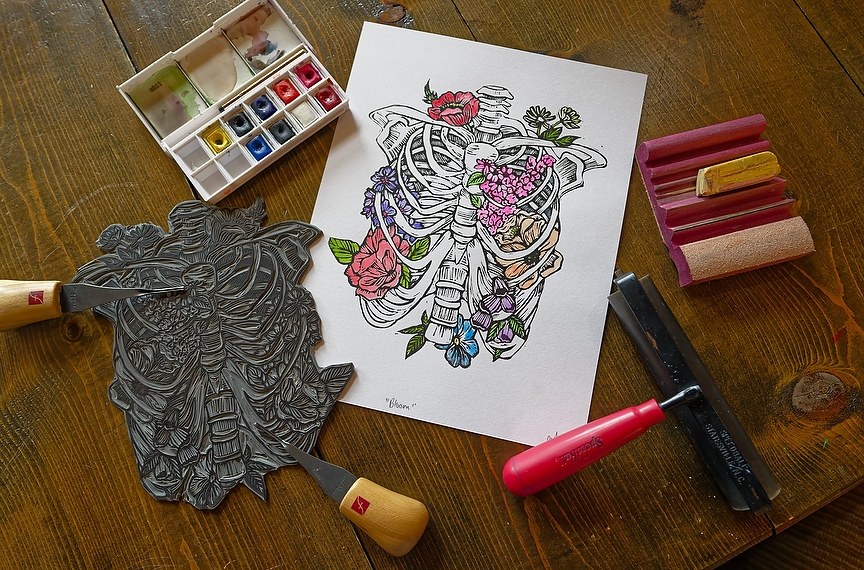
Her printmaking combined with watercolour has created reimaginings of folktales, mythology, and modern horror.
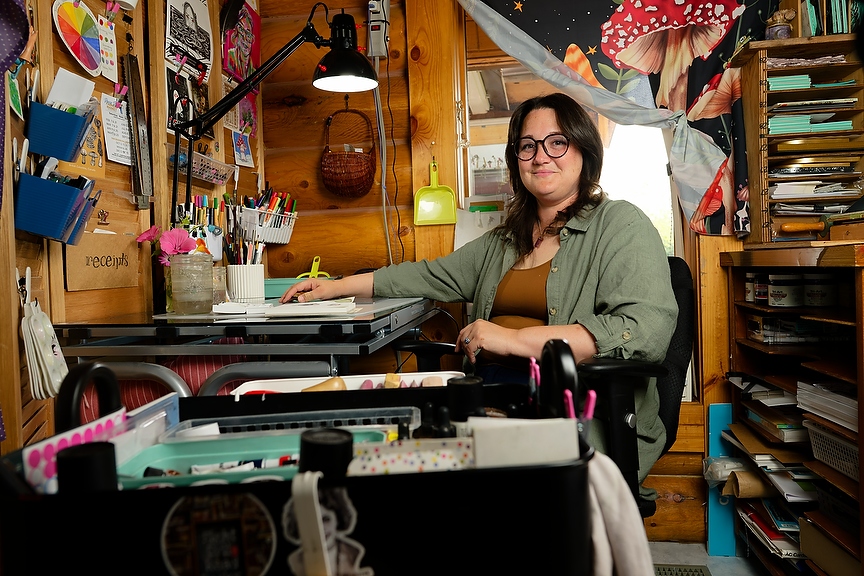
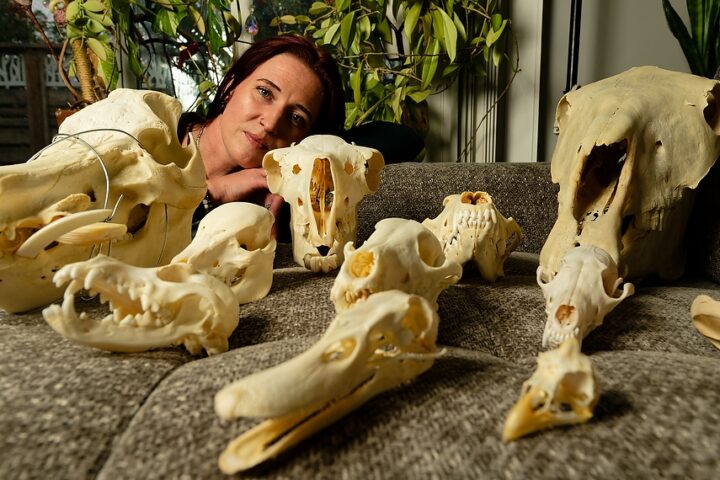
“I’m interested in the psychology and the societal image of what we find scary,” Gerk told The Article in her home studio on an almost fairy-tale-like piece of land tucked away in the forest.
“I think the perception of scary things is just so interesting.”
Historical tales of times of great fear of witchcraft and events like the Satanic panic create wonder for Gerk.
“What made everybody freak out? Was it really scary, or is it just the way everything’s being perceived? And I just find that stuff fascinating; it gives such power to an image.”
It led her to seek answers as to why we’re drawn to things that scare us.
Fears of witchcraft, monsters, and women seem to be common.
“So many different stories, they’ll come back to the same legend, and I was interested in finding out what was the underlying undercurrent of all these things, and it’s that women are scary.”
“We’re scared of what women can do and what women represent and how that’s tied to horrifying things.”
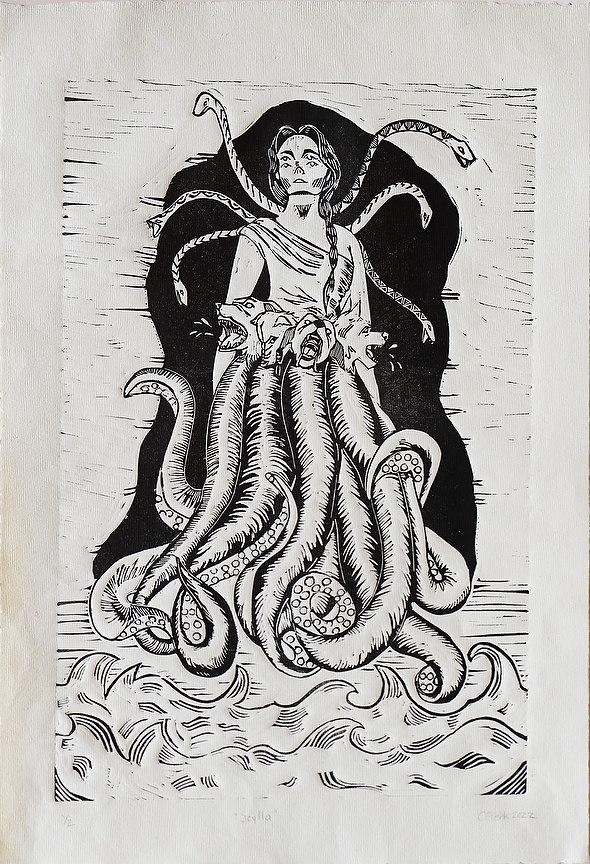
In her 2023 Travelling Exhibition (TREX) show, Otherhood, she explored the “monstrous woman” in folklore and legend.
She depicted Greek legends such as Medusa, Harpies, the Sphinx and Scylla.
In Greek mythology, monsters were depicted as nonhuman yet still assigned feminine pronouns, so in her work she gifted the monsters their femininity.
Otherhood also explores other folklore, such as the Irish spectre the banshee, Estonian Wolf Women, the Slavic Baba Yaga, and Grendel’s mother from the English poem Beowulf.
The bold line work, alongside moments of colour, traps viewers in a trance, following the lines as if turned to stone by glancing at Medusa herself.
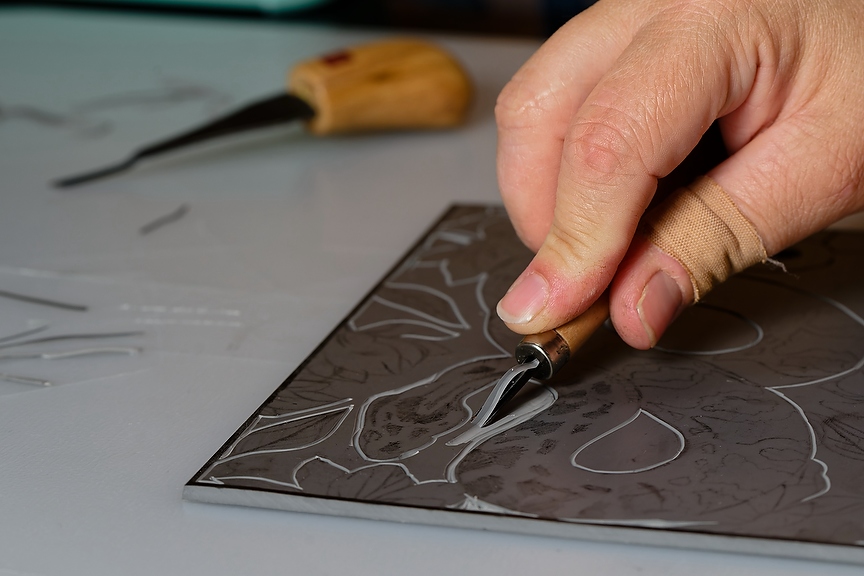
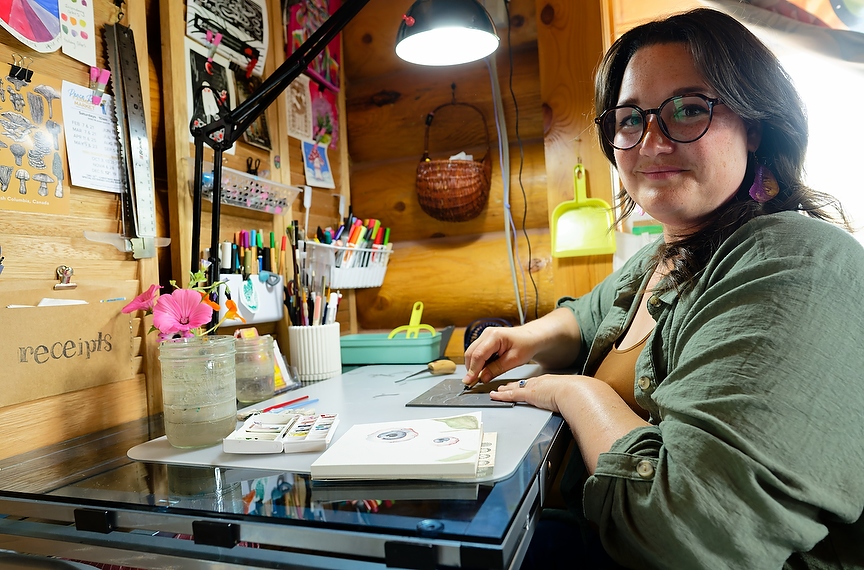
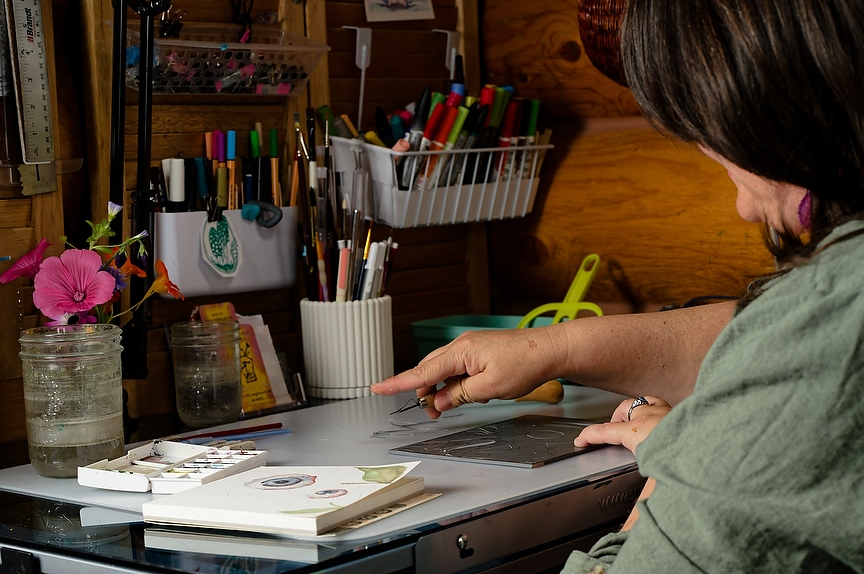
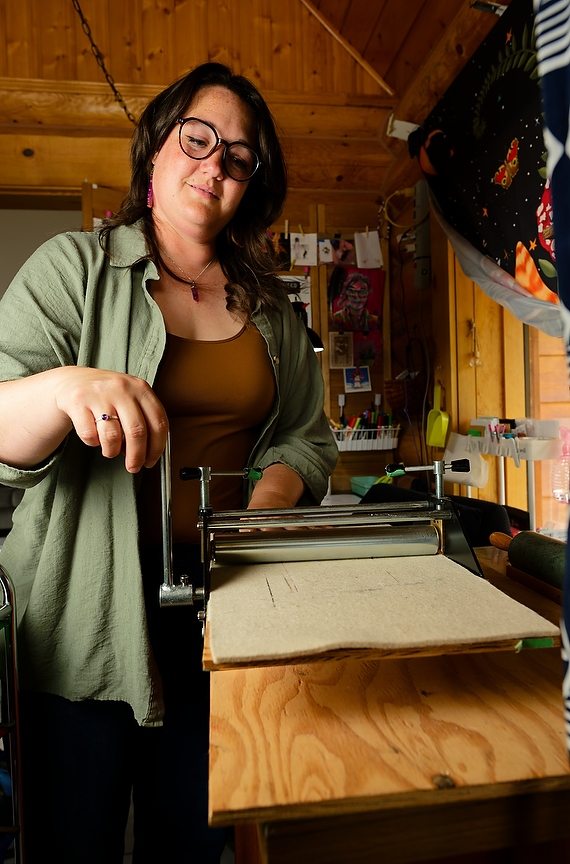
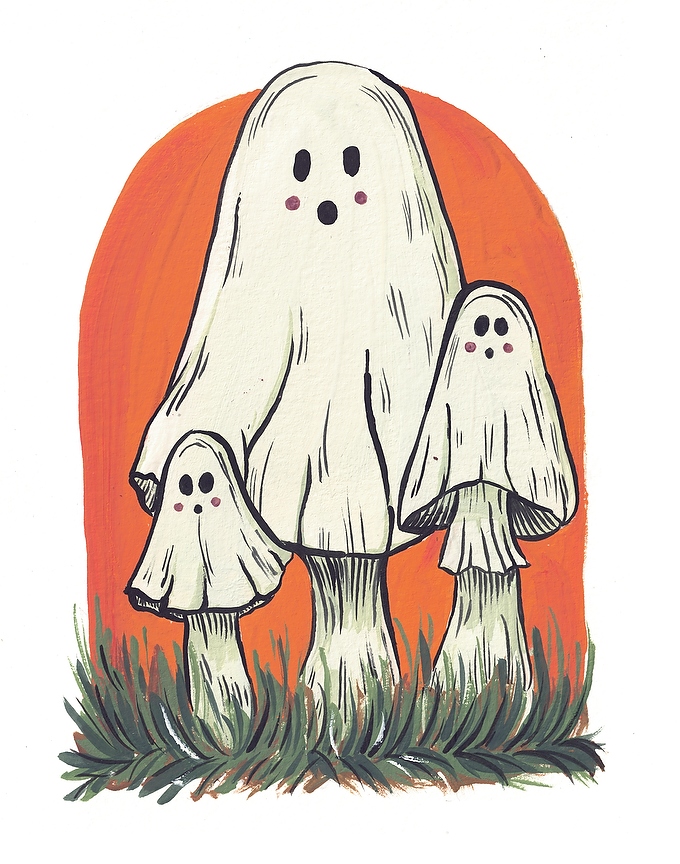
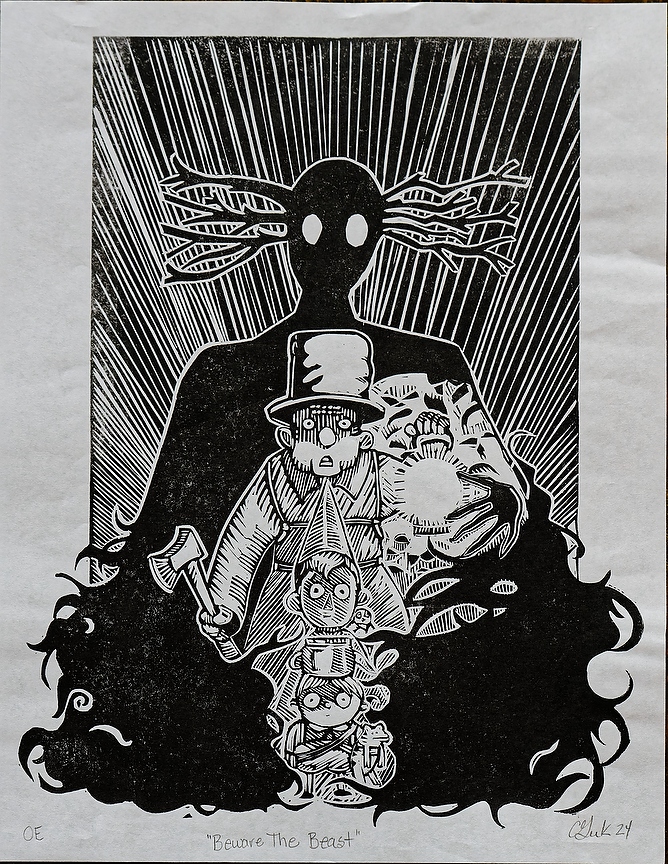
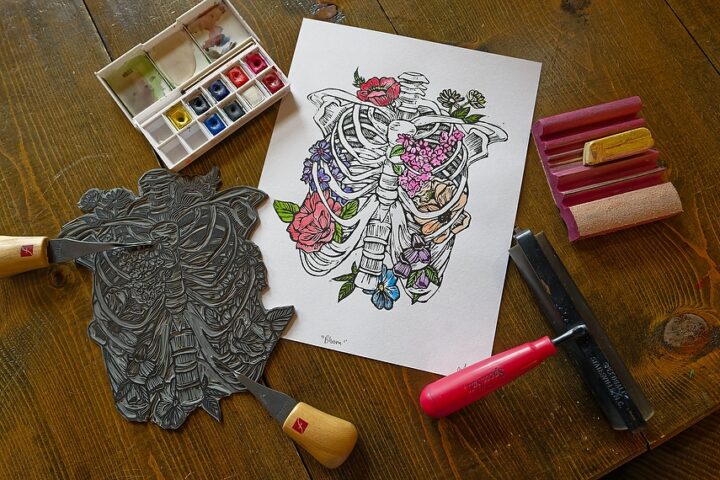
Her printmaking using linoleum and ink or paint creates striking contrast. At the same time, watercolours add vibrancy.
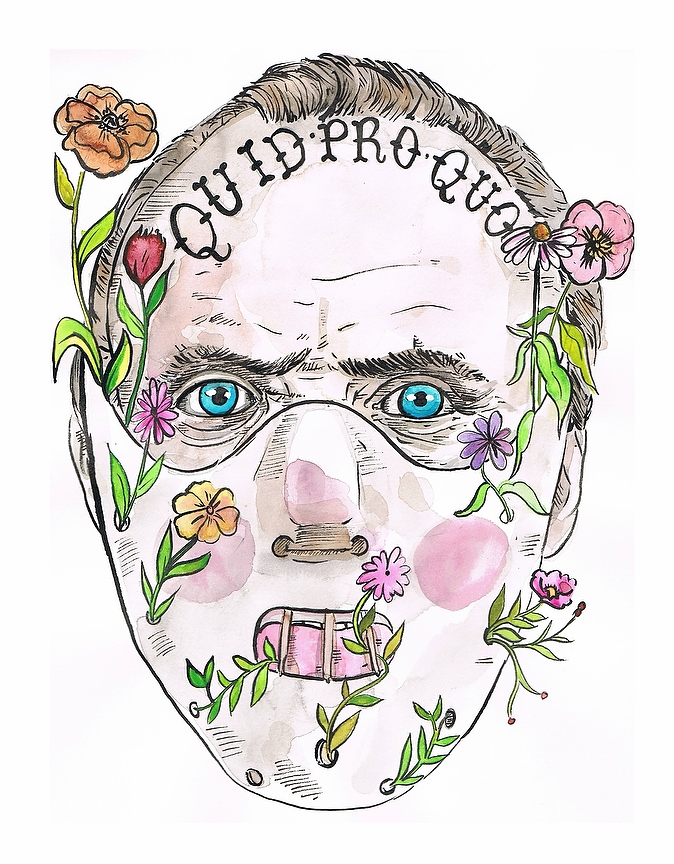
The lines from the printmaking add to a folkish feel, as the images feel from the past even when depicting modern horror pop culture.
Gerk noted that her work is connected to the paper it’s created on; she said that when her work is framed for exhibitions, she wants viewers to see the impressions on the paper, the rigid edges, and the crumple marks.
“I kind of felt like that was a little bit tied into the folklore theme; it’s crumpled up, and it was just straightened out, and it just keeps changing every time,” she said.
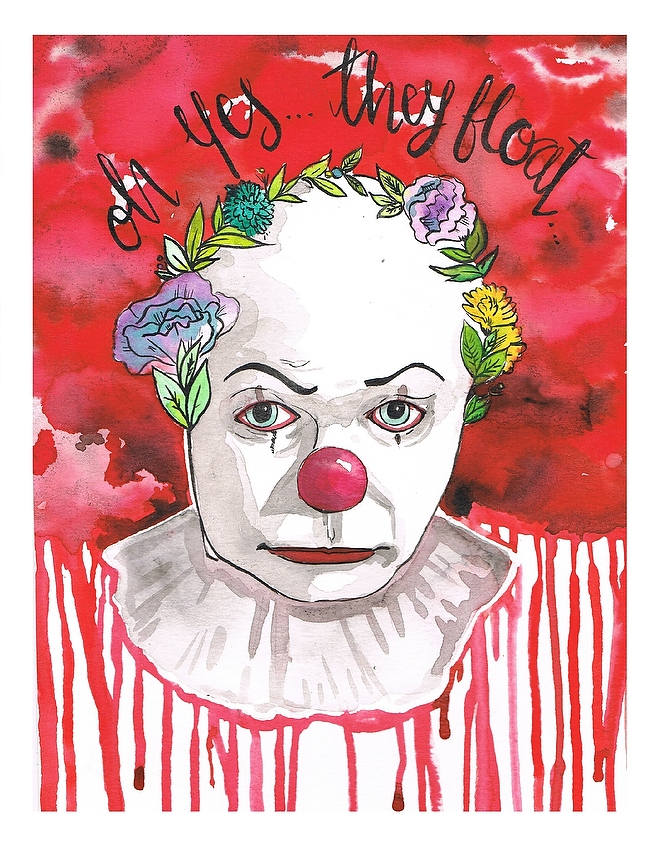
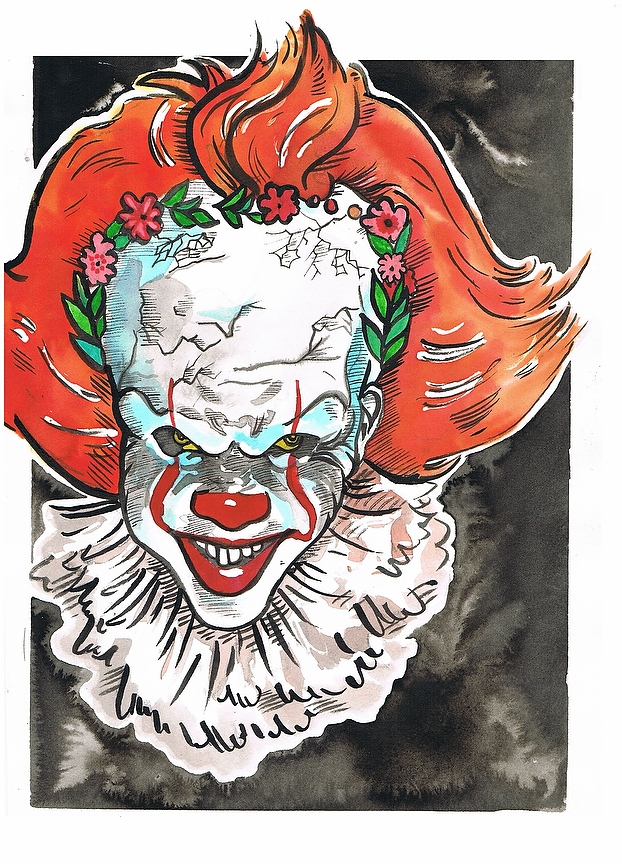
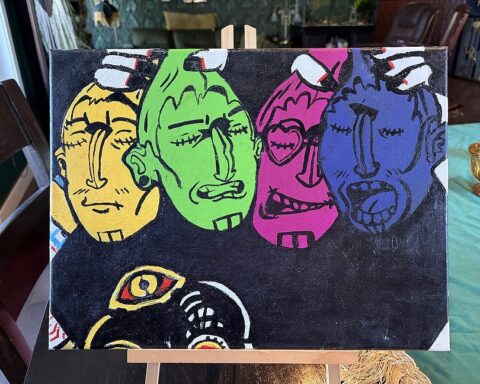
Her work also explores contemporary horror, including prints inspired by characters from film and television, and directors David Lynch (Twin Peaks, Eraserhead) and Robert Eggers (The Witch, The Lighthouse).
Prints of monsters such as Frankenstein, Nosferatu, and Beetlejuice can be found in her collection, along with many more familiar faces for any horror film fan.
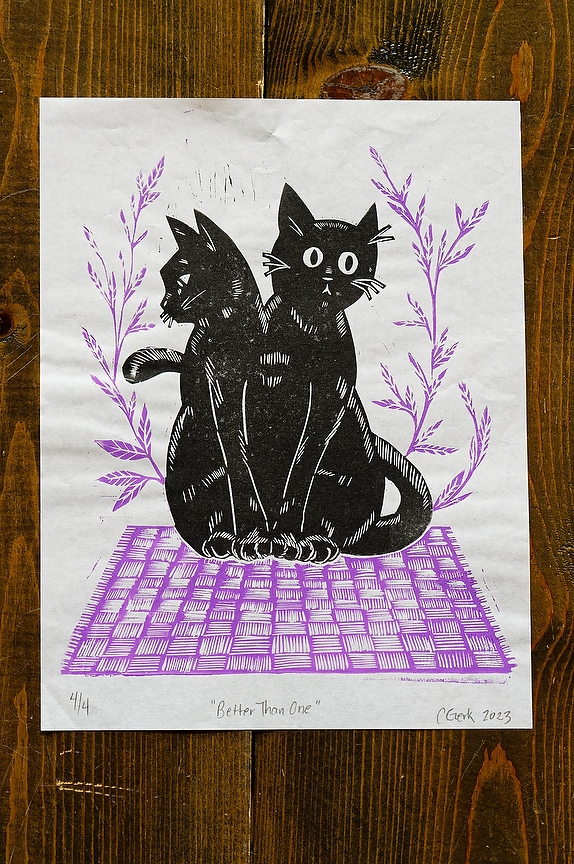
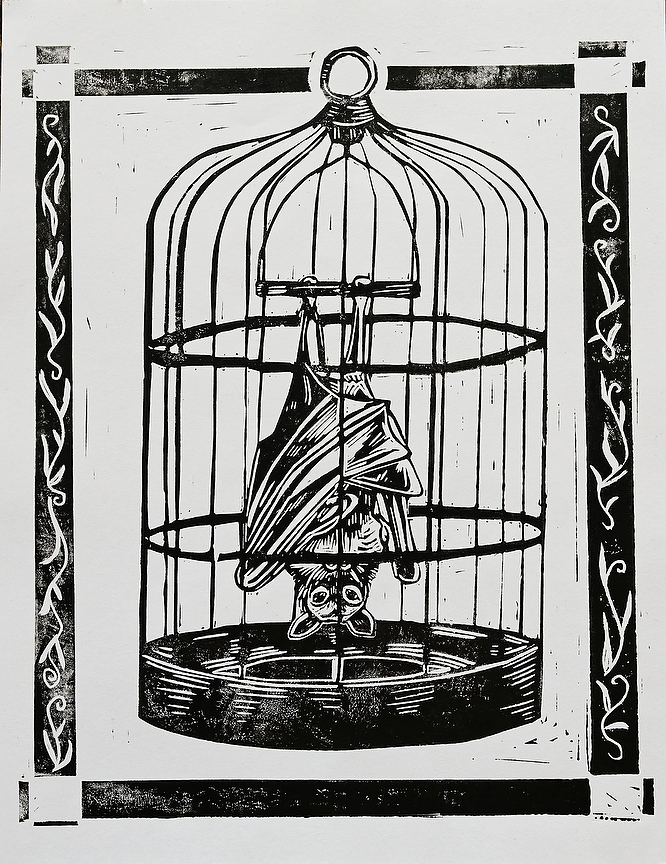
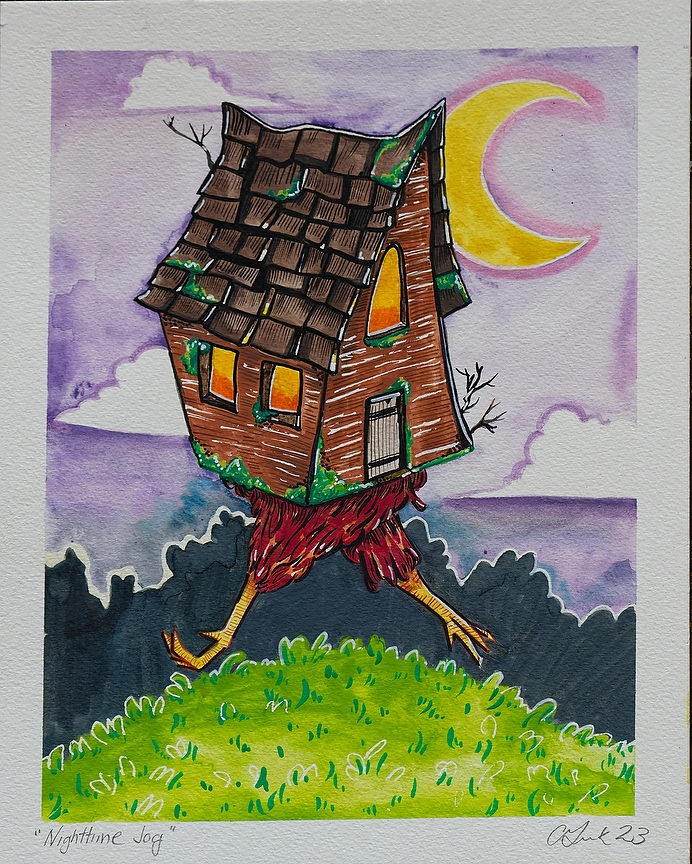
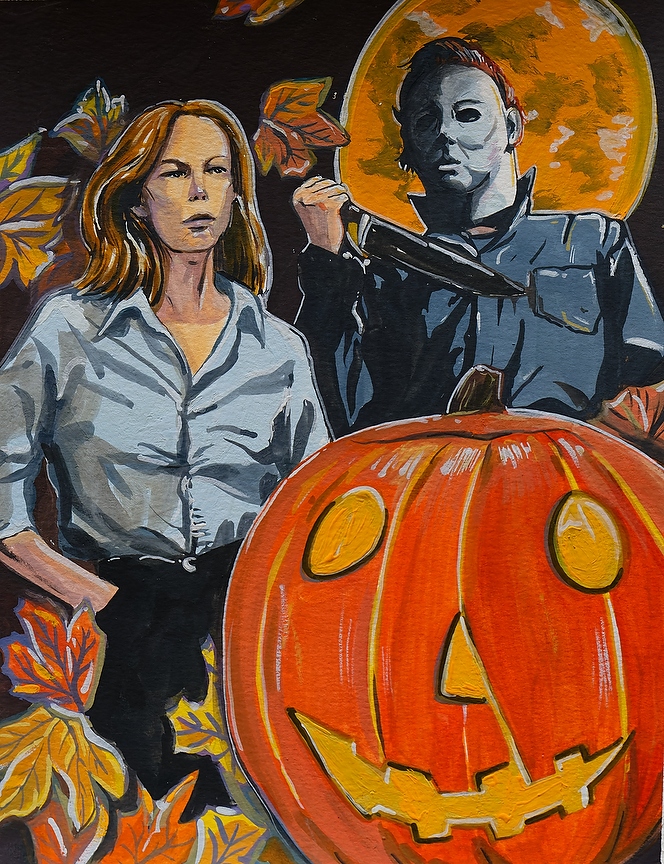
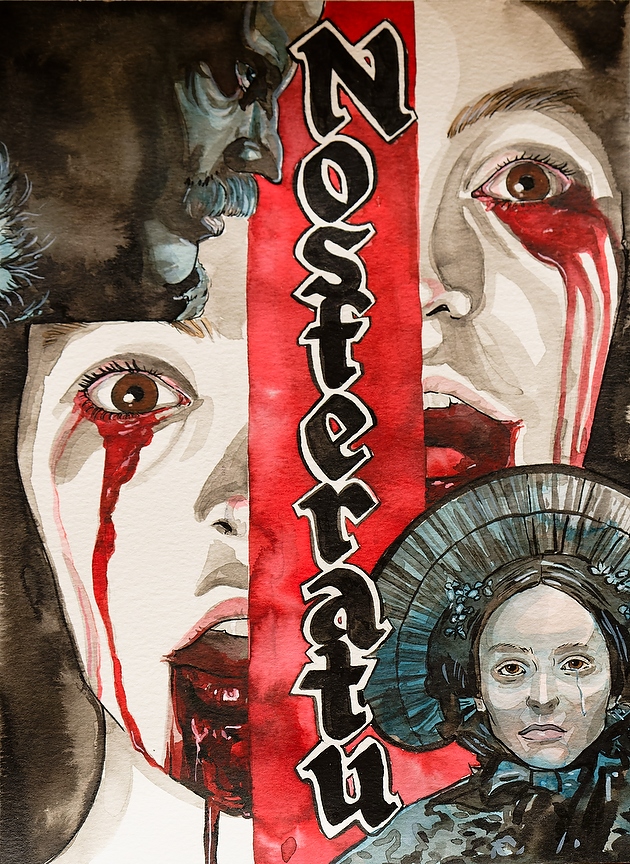
Gerk’s personal library includes many books that explore the psychology of horror movies and their themes.
“I find the recurring themes really interesting and horror is almost like its own folklore,” she said. “We were once sitting around a campfire, but now we’re in a theatre eating popcorn.”
Still, whether it be folklore or horror movies, “We either want to be able to understand the monster or want to be able to disconnect from the monster,” she said.
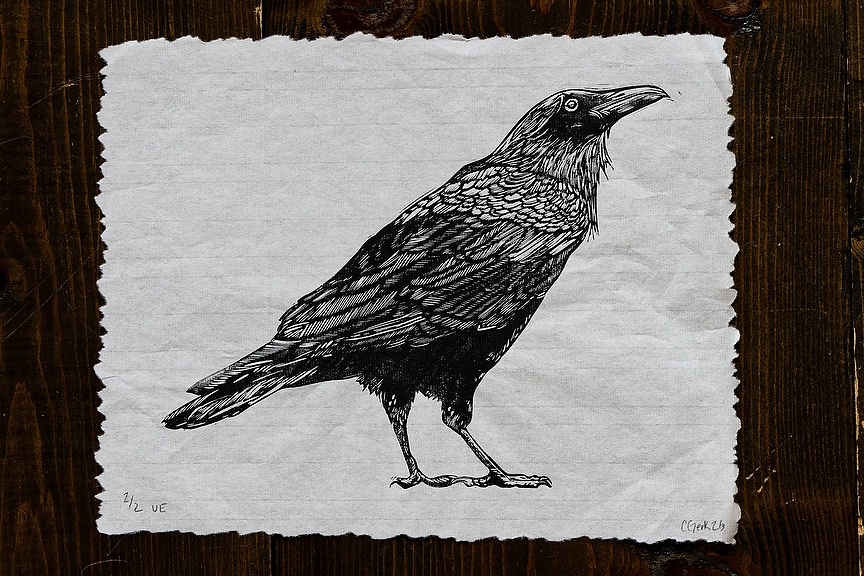
The many forms of horror and folktale allow us to explore the scary from a safe vantage point.
Although horror and folklore may not be what some may be looking for at a local art market, Gerk has found an audience online.
“Once I got online, I found people, and they found me, and that made all the difference.
“I think about myself when I was 16, and what I was really into, and I had nobody to talk to about it; if I’d had the internet, I would have found it, and I would have been so stoked.”
Her works are found online, and she sells them there because it’s a niche she can fulfill online; meanwhile, she sells at local markets, and some people are surprised that she’s seen the same obscure film as them.
In person, her work covering nature and local industry is more palatable for some.
“Living out here in this little pocket of the woods, a lot of my stuff is inspired by the plants that grow out here and the animals that we see.”
Oh, SNAP
In 2022, Gerk was selected for the Northern Alberta Artist Print Residence at the Society of Northern Alberta Print-Artists (SNAP) studio in Edmonton.
“It put me out of my comfort zone, which was a really big thing, because I left my kids and husband at home for five weeks. I left my rural little pocket of woods, and lived in the city for five weeks, walking back and forth with my supplies every single day, which was a pretty big change for me,” said Gerk.
The residency not only boosted her confidence but also taught her a variety of new skills and techniques.
“It was the first time that I had been in an environment, because I didn’t go to college or university, with people whose primary reason for being there was creating art, and it felt like this was a place where we were taking it seriously.
“And it wasn’t being shrugged off as a hobby, which it so often is in my daily life; not to say that people are largely dismissive, but sometimes people are.”
In SNAPline magazine, Gerk wrote about her experience at SNAP as feeling like an imposter.
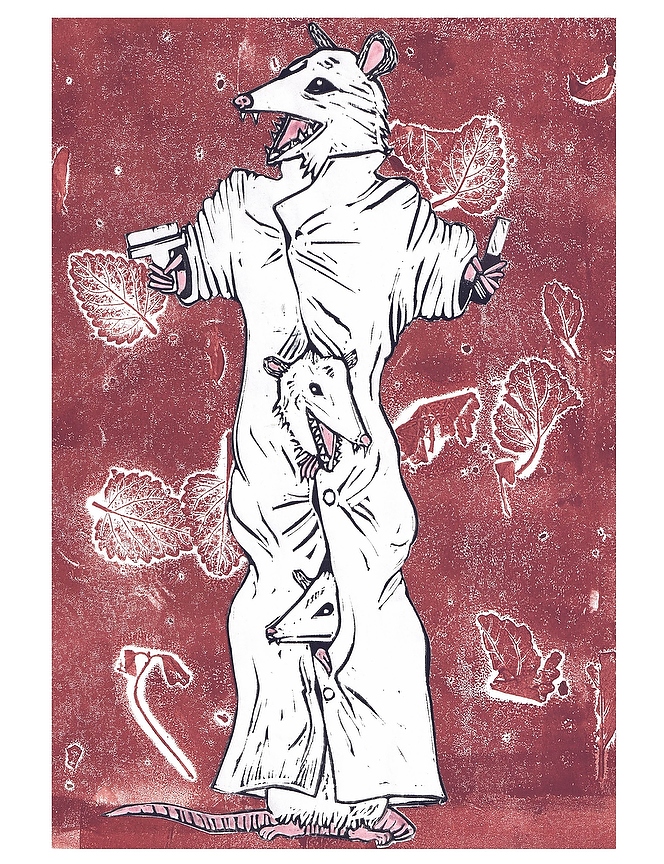
“I was absorbing as much as my little possum-brain would allow, balancing upon shoulders and hoping that no one would notice the lumps under my coat and realize that I was, indeed, an imposter, wobbling into an art studio, playing artist’s dress up,” she wrote.
“I carried on, carving, printing, terrified I might crash into a piece of equipment, shattering it with a screeching possum howl and skitter away to a dark corner to hang upside down.”
She would create a piece at the workshop depicting possums stacked on top of each other in a long coat holding printmaking tools.
Gerk says the imposter syndrome can still be felt today.
“Definitely, I still feel it;
I think it’s natural, I think it probably won’t go away. I don’t feel it as much as I used to.”
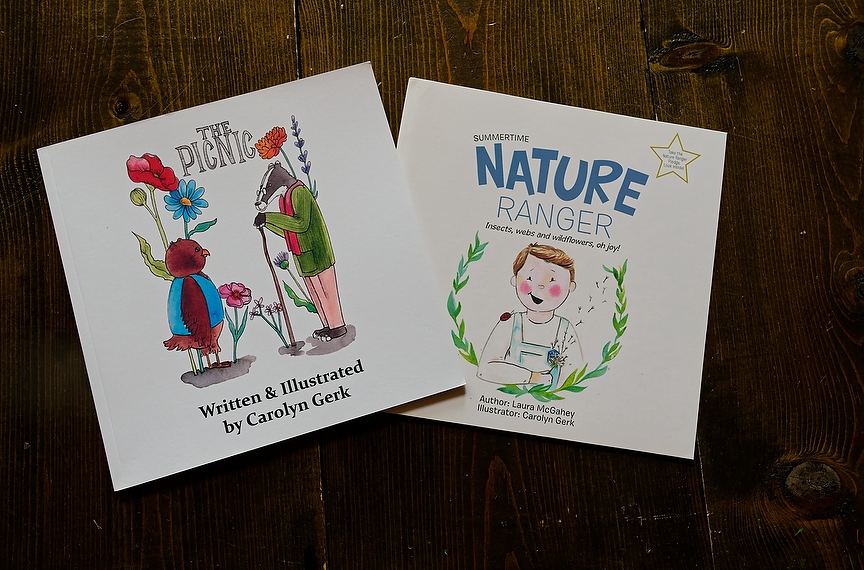
Still, her list of achievements is vast: as an artist, she has illustrated a children’s book for another artist, authored and illustrated her own children’s book, and given a variety of artist talks and workshops in the region.
You can follow Gerk on Instagram and Facebook at Velvet Hand Designs.




Follow Us