
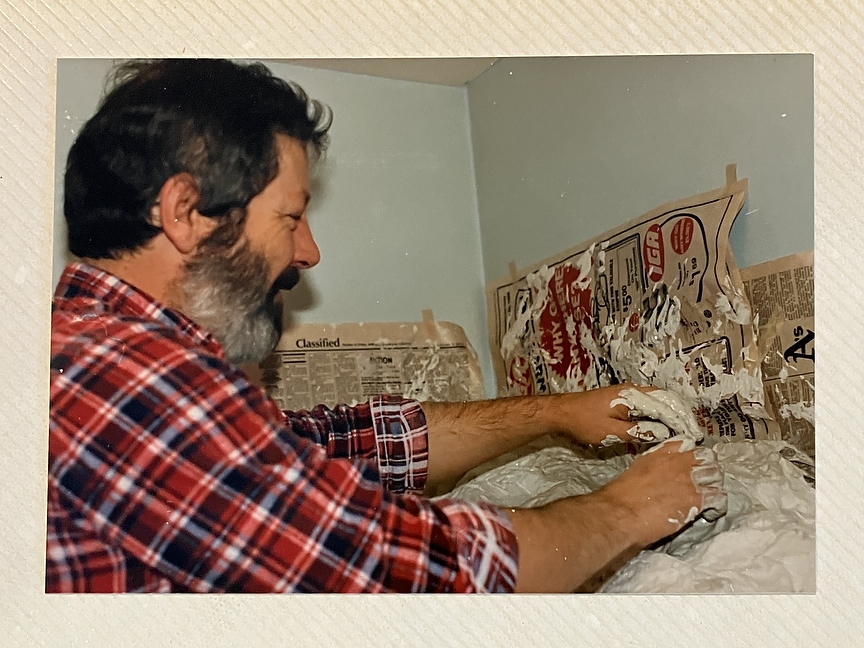
Accountants may have a reputation for being nerds, but Jim Jenner was one who was the cool guy who drove a 1972 Stingray Corvette, wore a leather jacket, and knew how to party.
My dad may not have seen himself as an artist, but he certainly was one.
When he wasn’t in the city working, he could be found camping, fishing, and among the trees.
Other times, my dad was home creating handmade miniature trees, making and colouring his own gravel made of plaster bits, or painting cars, people, and cows in a room where he created his own world.

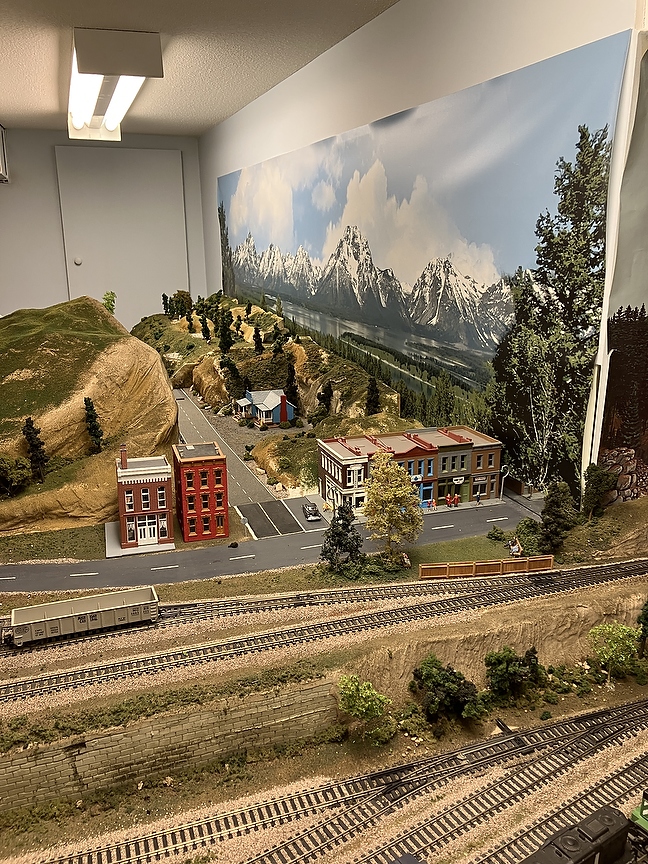
The central pieces were the trains and tracks, which travelled past buildings, animals and people, trees, grass, and shrubs, all made by my dad.
He had a vision. He saw in his mind where everything would be, where the trains would travel, where the buildings would be placed, and how far the forest stretched.
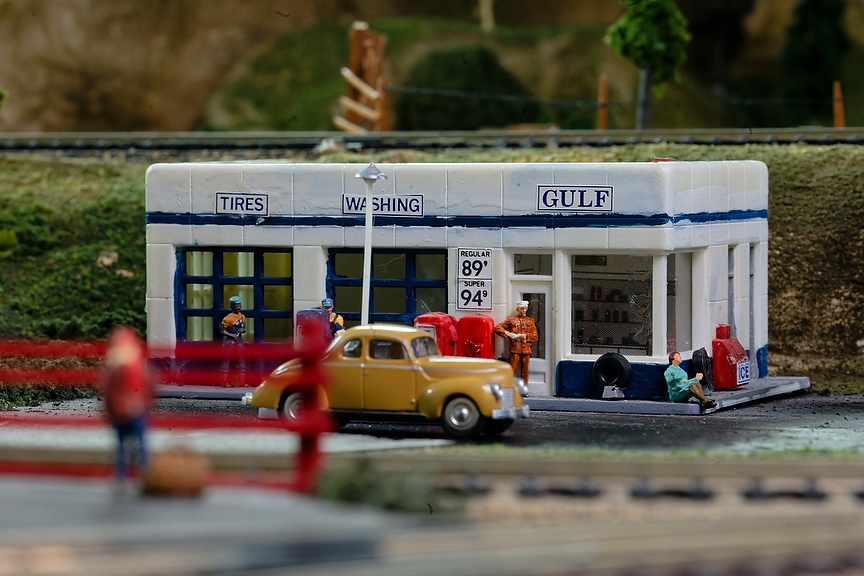
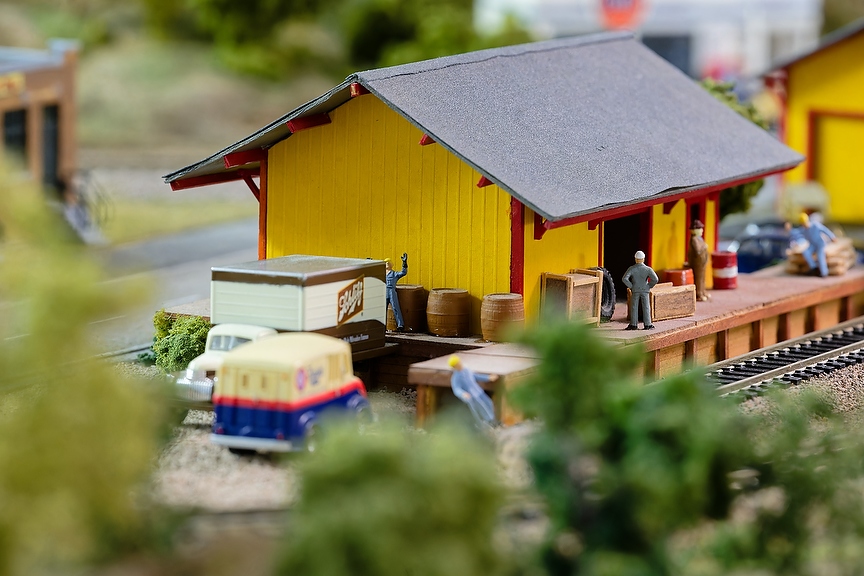
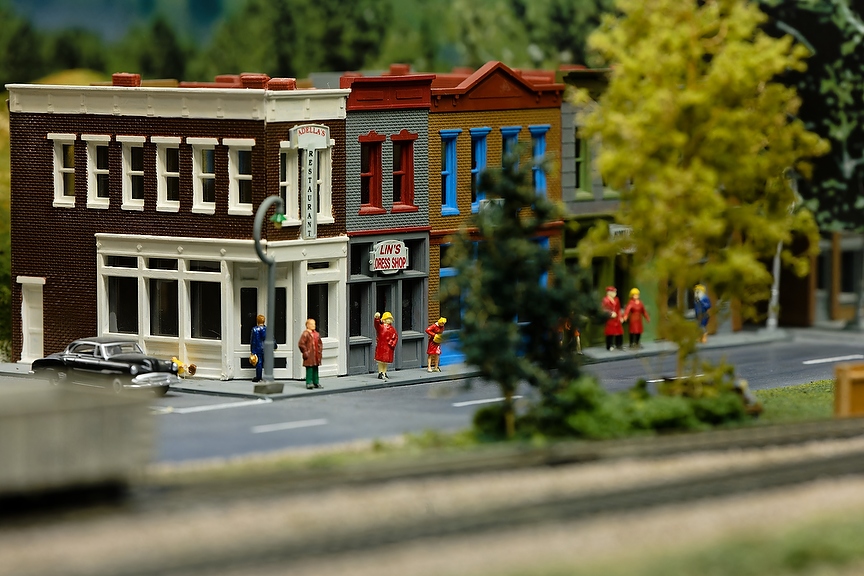
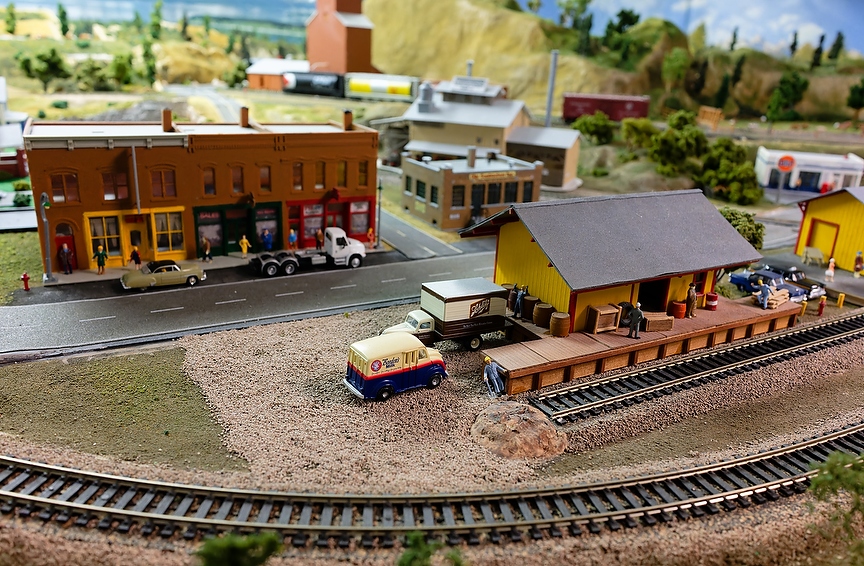
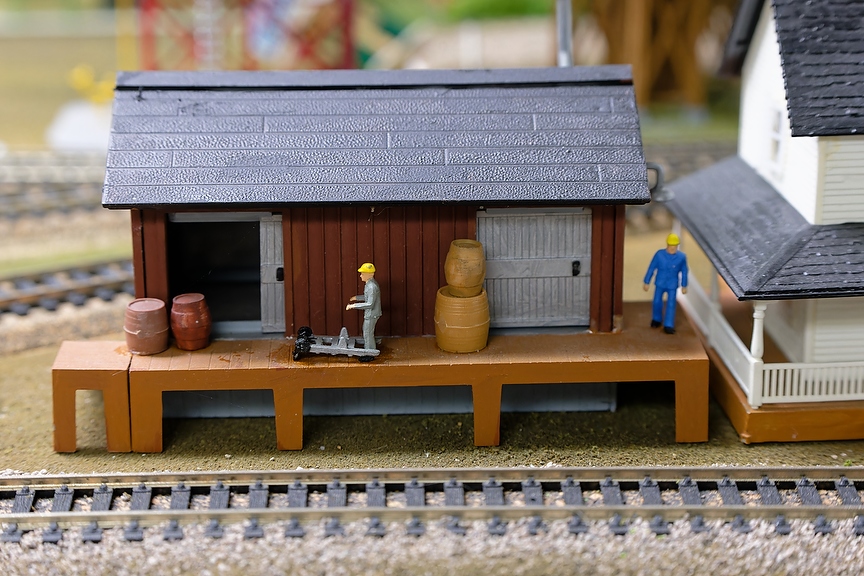
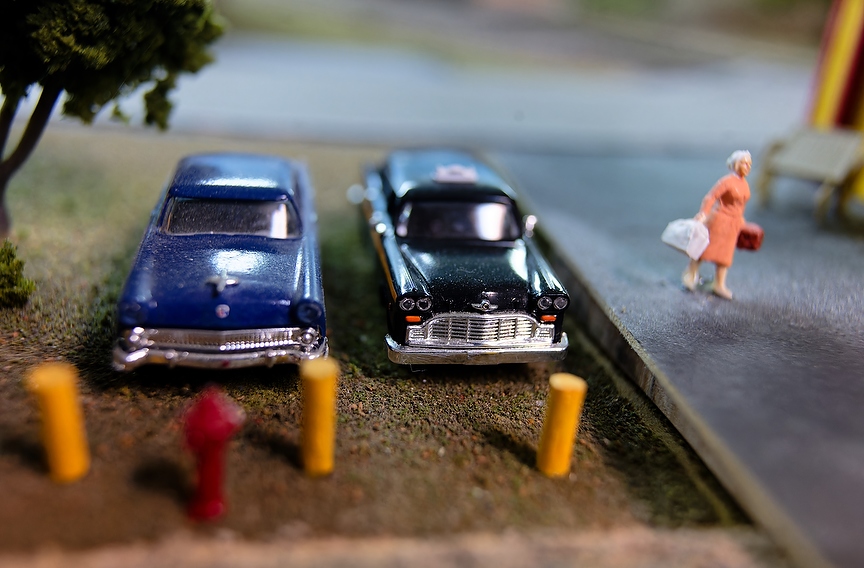
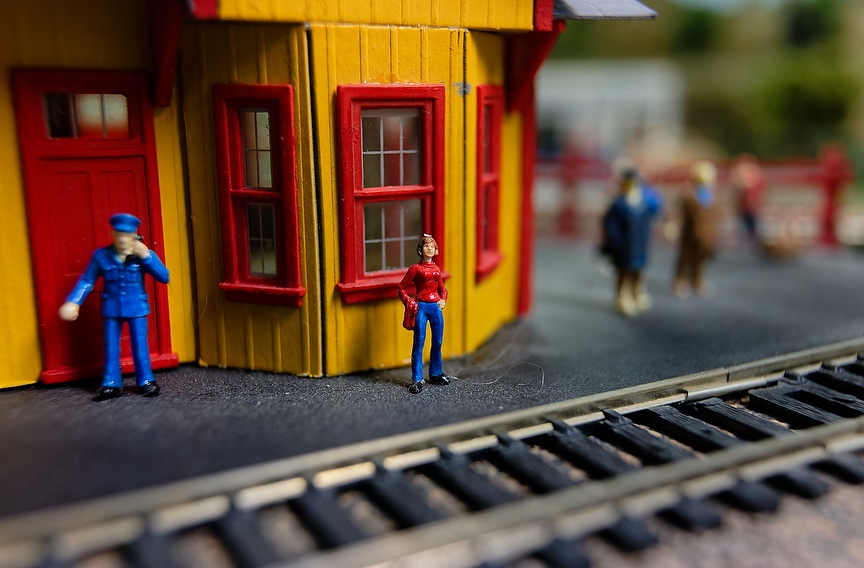
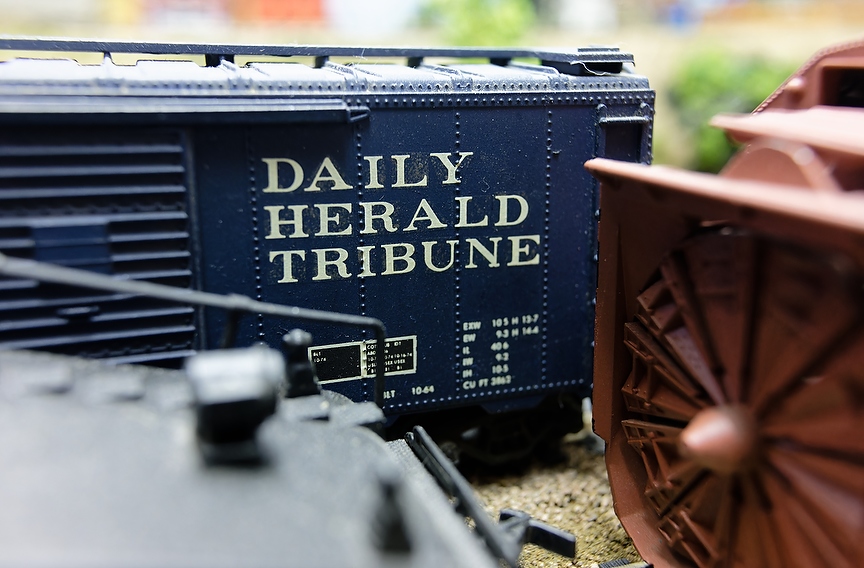

The space was fragmented with a little road here, a farm there, a campsite here—years of consistently adding more to his model.
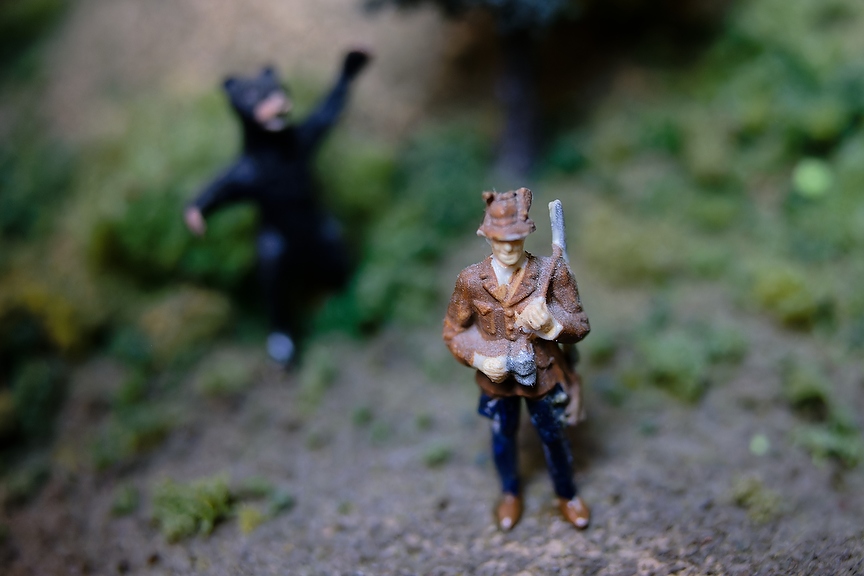
My dad’s humour would often be found in some of his little setups, like the tiny figure of a hunter in the woods and behind him a bear up high on its hind legs. It always made people laugh a little when they found it.
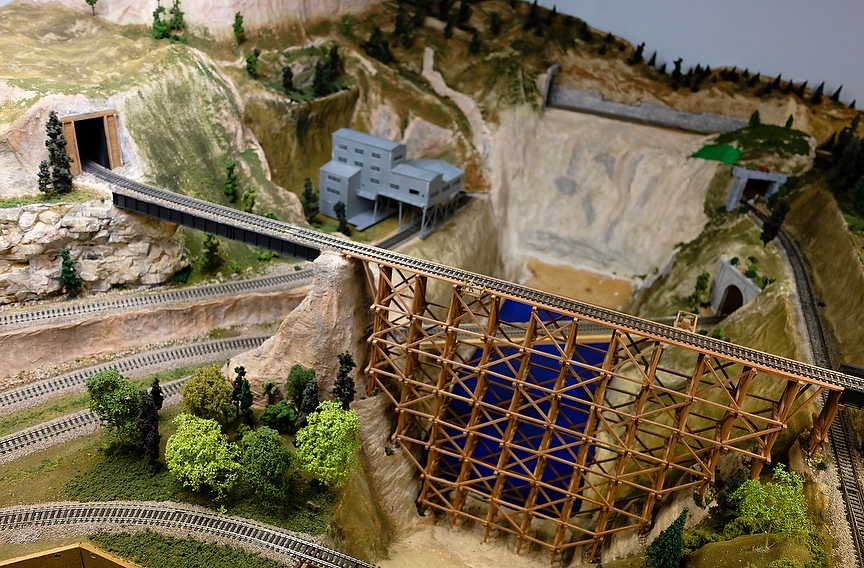
I think the piece my dad was most proud of was the train trestle bridge that didn’t come from a boxset, but that he built piece by piece. He measured, cut, stained and assembled his own bridge design.
Our family was always proud that my dad created this world.
He dreamed this.
He made this.
He had a vision from start to finish; he crafted a whole little world of his own.
The first set
My parents, Jim and Valerie, were married in 1975 and bought their first home in 1976, a cute little house in the Hillside area of Grande Prairie. The basement was unfinished, and they were able to design it as they pleased, and for my dad, that meant having a room for his model trains.
Dad built a tall table structure with two-by-four legs that would serve as the framework for displaying his models.
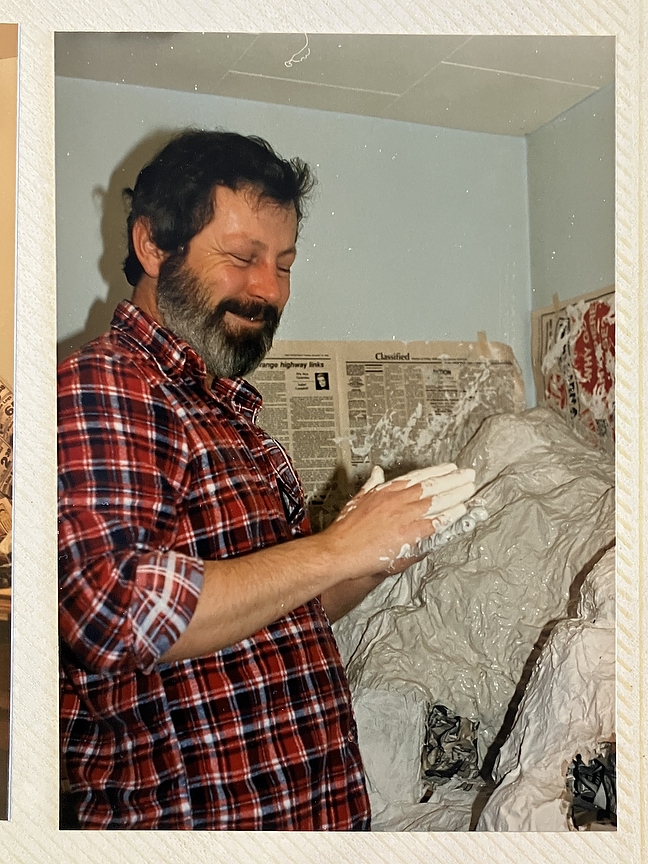
I remember when he was building mountains that he would form an armature out of chicken wire stuffed with newspapers, covering it with strips of newspaper he dipped in a watery plaster mixture.
From the start, he could sculpt the mountain shape, paint the plaster rock, and choose the right trees, grass, and gravel.
His model trains let him be creative. He could imagine and visualize how he wanted this world to look and then bring it to life.
At some point, my sister Lisa didn’t want to share a room with me, and my dad had to disassemble his entire train set so that she could have the space for her own bedroom.
We all knew my dad would miss his masterpiece, and we would too.
My parents moved in 1992, and the new basement had a TV room for the kids, one bedroom, a storage room, and space for dad’s trains.
He started over with planning and prepping his new space to create a structure that would hold his train world.
The new train room was so large that he had created manholes to access different parts of the model and move and adjust pieces in hard-to-reach areas.
My dad was a great storyteller, and I always enjoyed it when he described his vision and plans for his train room.
He created a whole world connected by his trains.
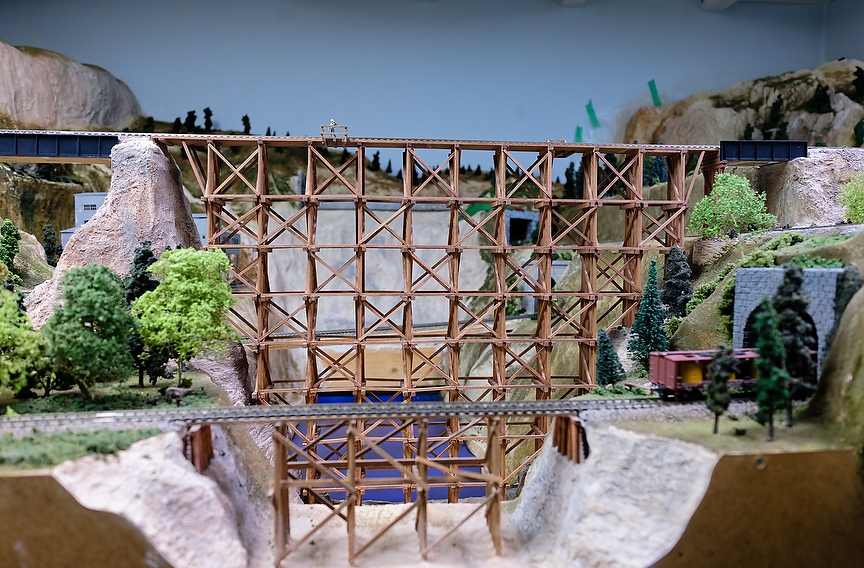
His train trestle bridge spanned a water feature, and he planned to use resin to give it a shiny, glassy, watery look, with some ripples here and there and a nice blue colour. It was placed right in a mountain valley.
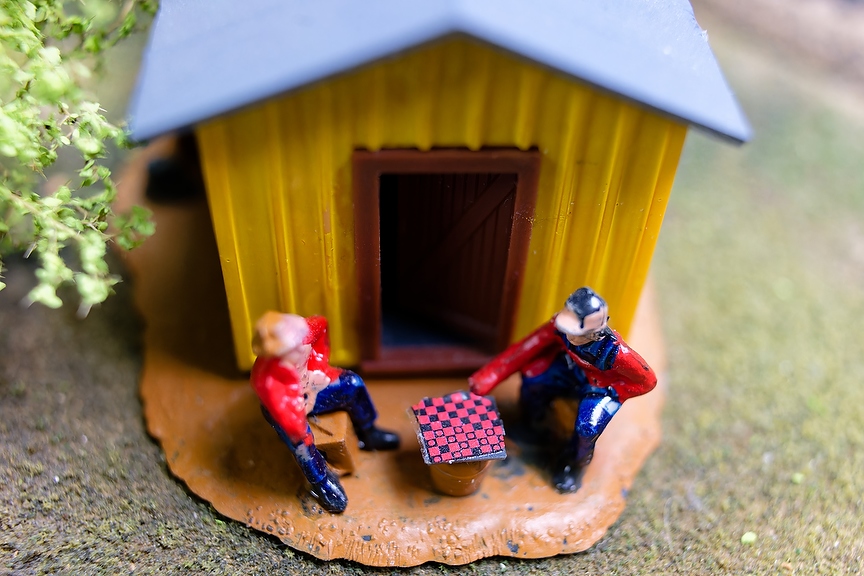
He would also let me paint the little people figures when I was a kid, even though it was really hard. They were so small! They’re the smallest little people.
Anytime we had new friends or company come over, it was always, “Oh, have you seen the trains yet?” and they were always blown away by what my dad created.
In 2013, my dad had surgery for throat cancer and then in 2017, a back surgery.
It left him with significant issues with mobility and speaking.
It led to an early retirement in 2016; he was no longer in the office, but also no longer able to make train pieces the way he had before.
The dedicated artist he was, he continued to work on his trains as much as he could through his illness.
He passed away in 2022, and the sculpture he spent 30 years building is still there.
My dad studied at NAIT in Edmonton and then moved to Grande Prairie to be an articling student at what is now known as Fletcher Mudryk LLP.
He remained at the firm for 39 years, becoming a partner in 1977 and, in time, leading the firm as a senior partner.
What I knew about being an accountant didn’t seem very arty to me: working with companies, helping people with their money, paperwork, contracts, and talking to the “tax man.”
It might be easy to assume it’s not a creative profession.
There was a time when I thought that being an artist was separate from accounting.
I remember my dad sharing with me why he enjoyed being an accountant so much: he saw it as a puzzle.
He knew there would always be an answer or the best solution, and it’s a good feeling to get it right. Problem-solving is an amazing characteristic.
I always knew my dad and I were alike, especially because we liked being in nature, jigsaw puzzles, and we’re both incredibly funny—definitely the funniest in the family.
But it’s only recently that I’ve come to see that my dad and I had even more in common.
The artist and the accountant really did share some common ground.
What now?
What will happen to my dad’s masterpiece when my mom moves?
We would love to find a collector or somebody new to keep this vision alive and love it as much as my dad did, but perhaps it will just be disassembled into pieces.
We will have photos to remember it by. For a hobby, it was unique.
I plan to keep a little one-foot-square section of something my dad built and put it in a little plexiglass case so that I can have trees built by my dad and people painted by my dad.
He may not have thought that he was an artist, but I think he was.




Follow Us