

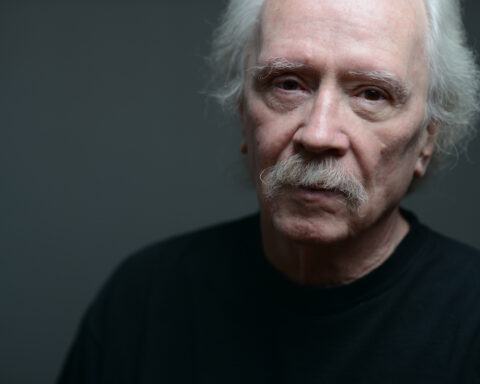
Last year, we lost one of the greatest creative forces in cinema, and on the anniversary of his passing, it’s a good time to talk about him: David Lynch, “The Dreamer.”
Lynch was known for his surreal, dream-like stories that would leave your conscious mind confounded, yet let you remain aware on an emotional or subconscious level.
“The beautiful thing about film is it can tell abstractions, as well as specific things, and it’s a language where intuition can come to play,” he said.

He died on January 16, 2025, at the age of 78. Although best known as a filmmaker, Lynch lived as an artist, working in movies, television, painting, photography, music, and writing.
To get started with Lynch’s films, one should begin with his debut film Eraserhead (1977), a nightmarish film about a man having to raise his mutant child in an oppressive and bleak world.
It started its life in midnight theatres and quickly became a cult hit.
It has odd characters, a moody atmosphere and an unsettling soundscape that will seep into your mind.
Eraserhead is a great starting point for a journey into a larger world of cinema, but it can also feel like jumping into the deep end, so keep that in mind if you decide to check it out.
If Eraserhead isn’t for you, perhaps The Elephant Man (1980) is more to your liking.
The movie tells the story of a man born disfigured and raised as a circus freak to be gawked at, until one day a doctor stumbles upon him and helps him escape the circus, showing him kindness and compassion.
The film is about dignity and humanity, highlighted by the struggle of our lead character to reflect on the lives we live.
The Elephant Man proved Lynch was not a one-trick pony, but a true master of the craft; his vision ranged from the mundane country life of The Straight Story (1999) to the hauntingly frantic maze of Inland Empire (2006).
Mulholland Drive (2001) takes us back into the world of dreams.
Although Mulholland Drive is Lynch’s most popular film, it tells the story of a young woman making her way to Hollywood to become an actress who encounters a woman suffering from amnesia, and together they search to figure out who she is. Meanwhile, shadowy figures in Hollywood play their secret games.
This film revisits a recurring idea in Lynch’s films: the world on the surface is all sunshine and flowers, but what lies underneath is more sinister, as in the quaint town that is the namesake of the television show Twin Peaks (1990), or the white-picket-fenced town of Luberton in Blue Velvet (1986).
Mulholland Drive has a very dream-like quality that draws you in with its mystery and shadowy figures.
Lynch said, “Ideas are like fish… If you want to catch little fish, you can stay in the shallow water. But if you want to catch the big fish, you’ve got to go deeper. Down deep, the fish are more pure. They’re huge and abstract. And they are very beautiful.”
Bonus round: These are a few films that were among David Lynch’s favourites that you may want to check out, and they will likely inform you as to where Lynch was coming from in his approach to film. Sunset Boulevard (1950), 8 ½ (1963), Monsieur Hulot’s Holiday (1953), It’s a Gift (1934), Lolita (1962), The Wizard of Oz (1939).











Follow Us