

As an artist coming from Iran to Canada, Forouzan Afrouzi has learned to embrace the slower lifestyle of the Peace Region compared to the hustle and bustle of Tehran.
In Iran, she and her friends would spend their Friday evenings attending multiple openings at over 80 local galleries; they always had a few to choose from.
“All of the openings happened on Fridays, so my friends and I would visit six to seven of the galleries every Friday, and we would also be missing a lot of other art events, because there was a lot,” she said.
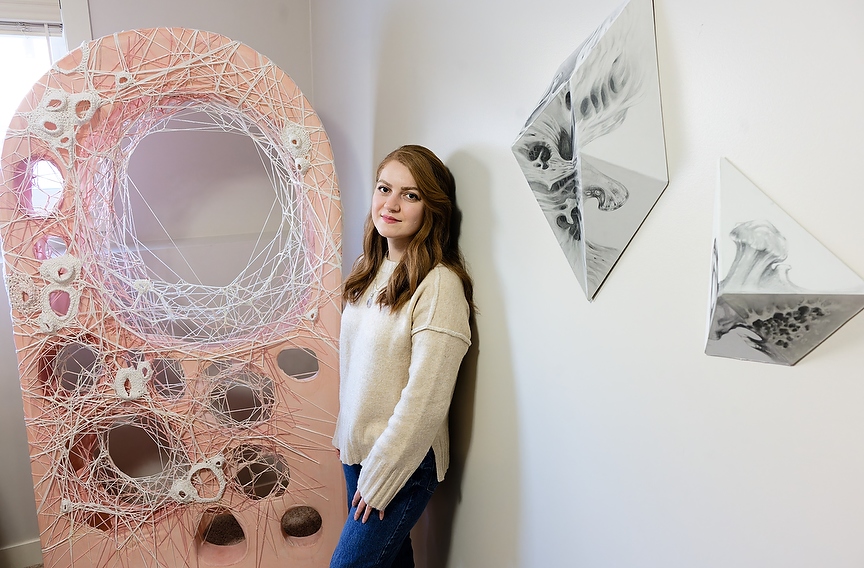
In the Peace Region, with fewer galleries and openings happening less frequently, she has been able to work on her artwork and share it with the community.
“When I came here, at first, I felt a sense of stillness,” but she was quickly able to embrace the stillness and find its benefits.
It allowed her to focus on her own artwork and find places to display it.
Within six months of arriving in Canada, Afrouzi would have her first show at Peter von Tiesenhausen’s Doris Gallery in Beaverlodge.
She said the challenge for her was being in a new country and finding all of her supplies.
Her supplies could not be found simply by taking a trip to the local arts and crafts store.
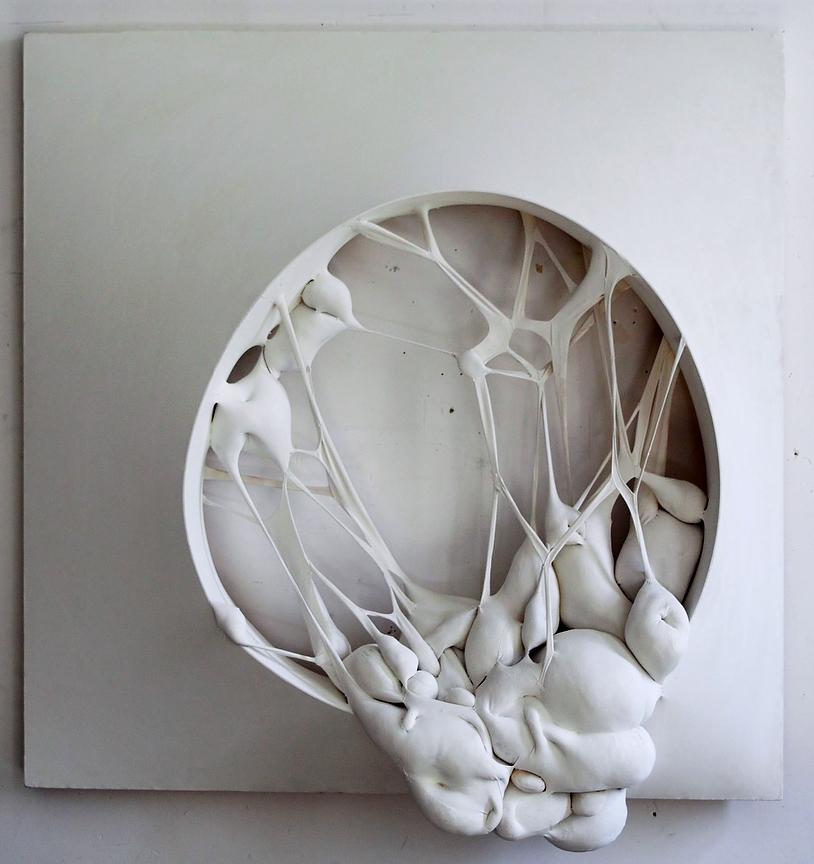
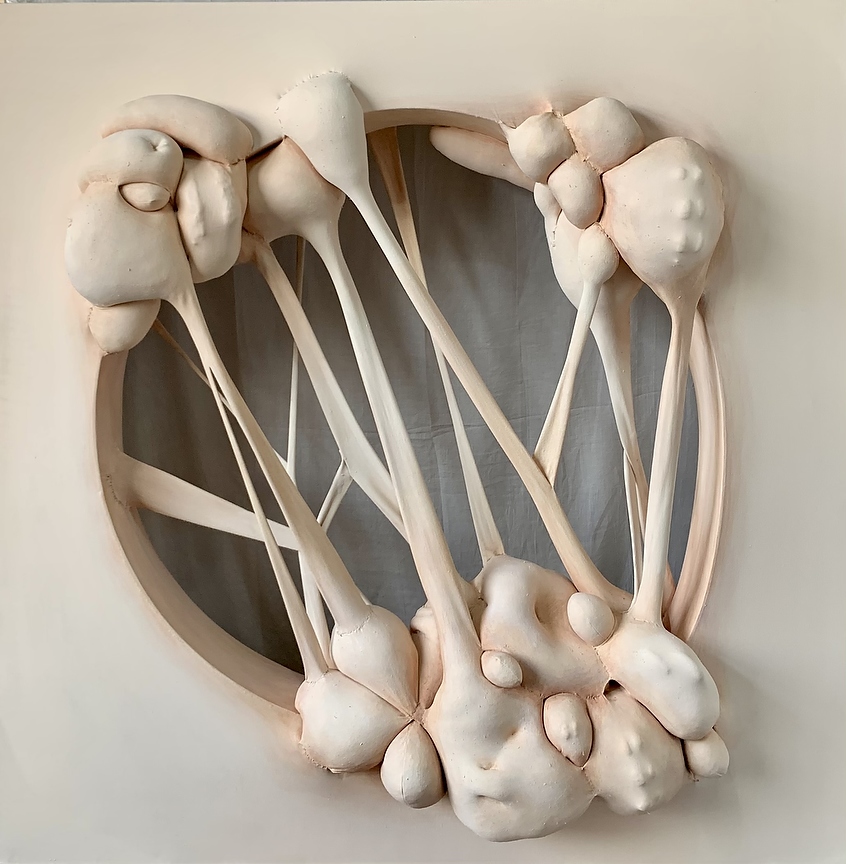
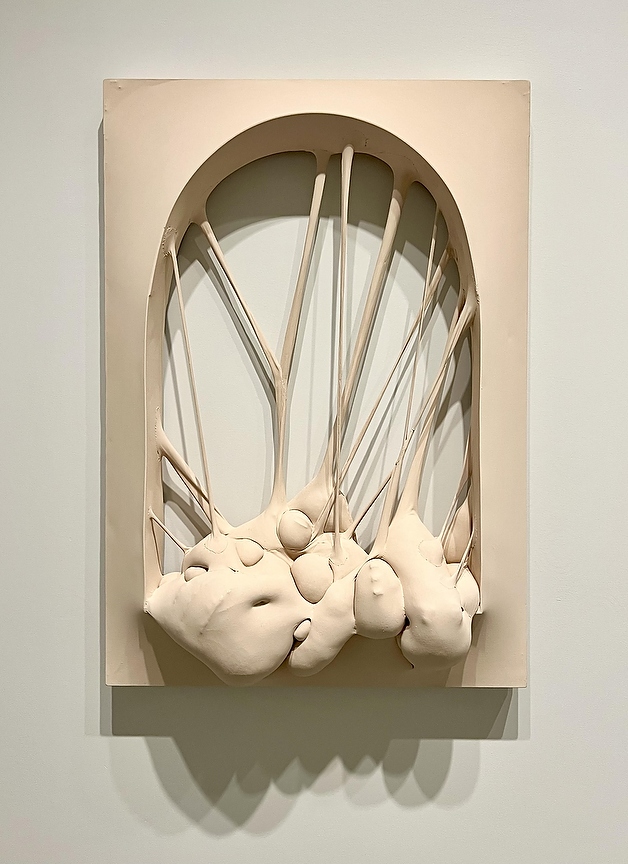
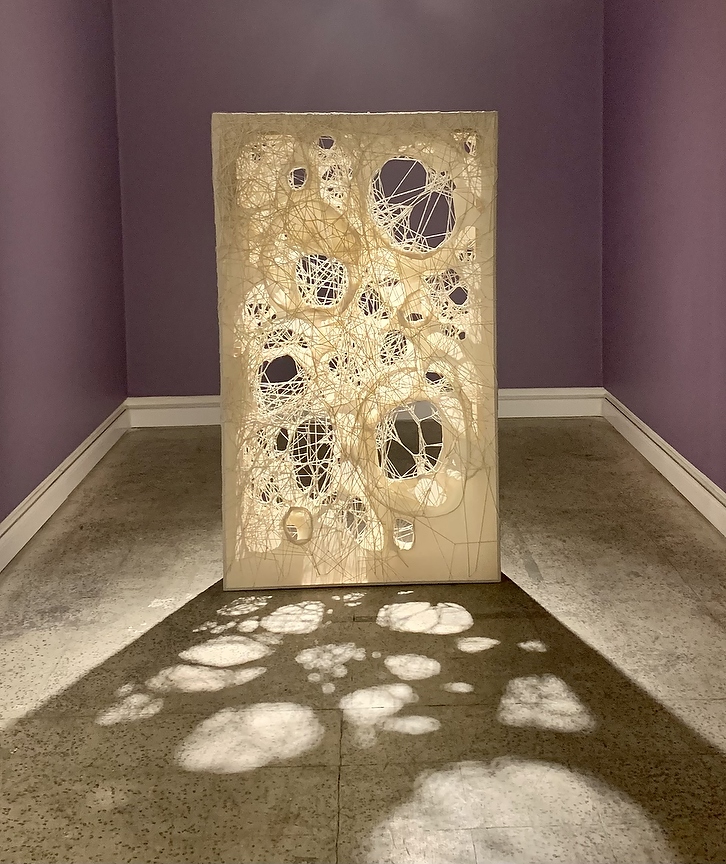
When in Iran, her father, a carpenter, would help her build the frames of her sculptures. Now a world away, she and her husband Mohsen Ahi Andy worked together to build the frames of her sculptures.
She then found materials, such as fabrics, to begin creating her artworks.
The concept of her sculpture work is to show the intensity of human emotion within our bodies; the stretched fabric over a large structure shows the intensity and suffering that all humans can feel.
“Some people are really afraid of the holes because they have trypophobia, but for me it’s kind of enjoyable,” said Afrouzi.
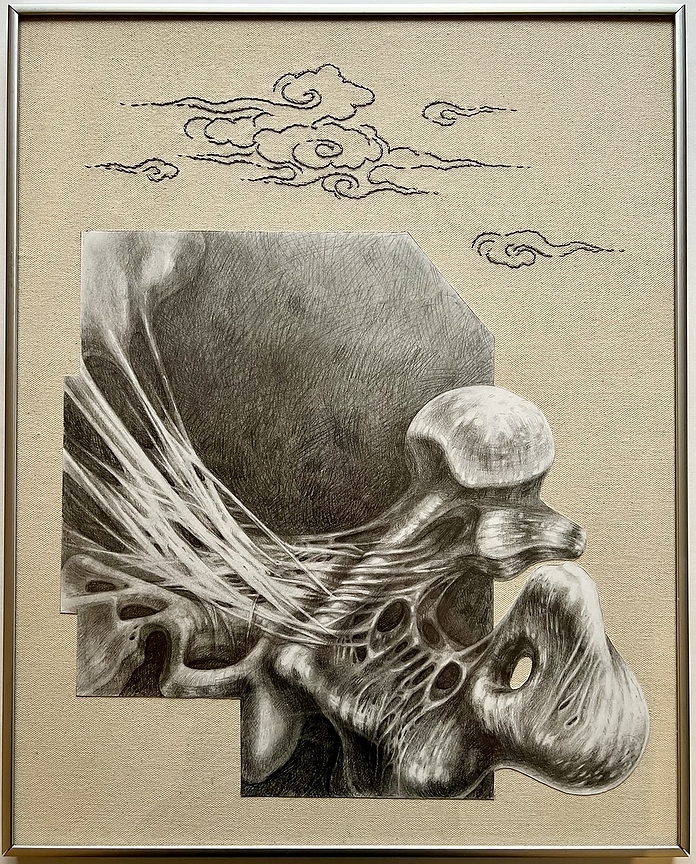
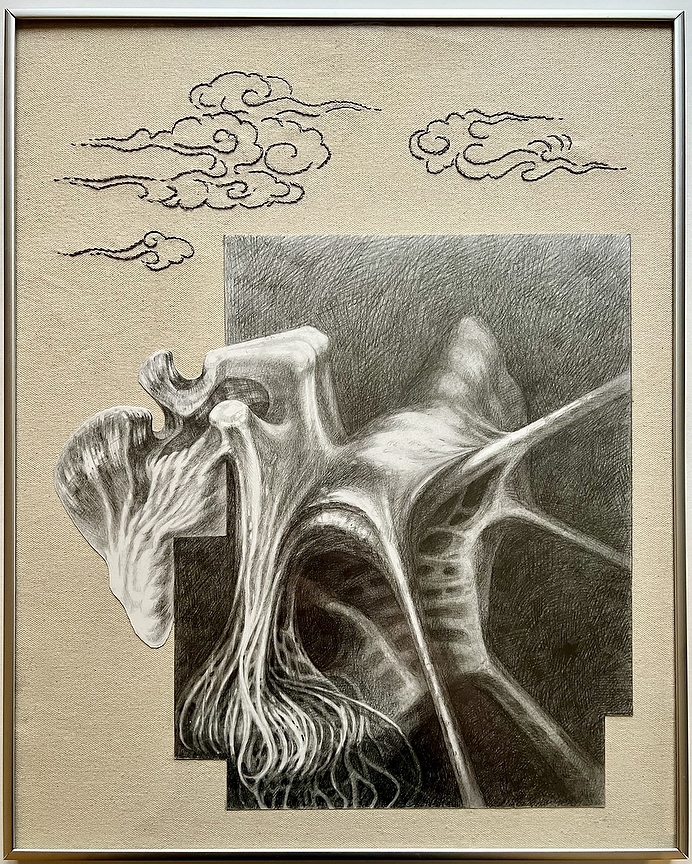
Her sculptures, inspired by the microscopic view of veins and muscles within the human body, convey the intensity and agony of humankind.
She limits the use of colour in her work, calling them monochrome, to allow viewers to see all of the different things happening within the sculpture, believing that colour would detract from the sculpture’s intensity.
“I like to make it monochrome so people can just see the forms moving around, and when you reflect the light on it, it makes the shadow on the floor,” she said.
Only a couple of months later, her artwork would be displayed in Fort St. John’s Peace Gallery North.
She then would have works displayed in a group show, what we leave, what we take, at the Art Gallery of Alberta (AGA) in Edmonton.
“That show was the most important exhibition that I have ever had in Canada, because I knew the gallery (AGA) had a really strong history of showcasing masterpieces, and a lot of amazing modern and contemporary artists,” said Afrouzi.
She has also since been displayed on the Travelling Exhibitions Northwest (TREX) wall outside the Art Gallery of Grande Prairie.
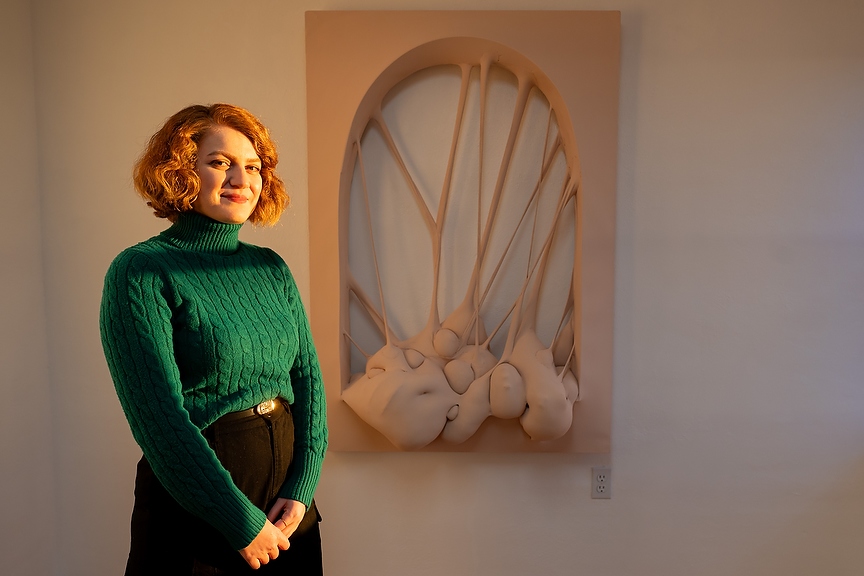
Afrouzi said her interest in art started in childhood.
“When I was a kid, I remember that I always had an interest in making stuff with my hands.”
She said she was always busy making crafts and painting, and her father noticed her interest and put her in art classes.
It would eventually lead to her attending the University of Art in Tehran, where she received a bachelor’s and master’s in painting.
In the final years of her bachelor’s degree, she began experimenting more with other materials, in a time when she was searching for her “own style.”
When interviewed about her exhibit in Fort St. John, the reporter said they had never seen artwork like hers before.

In the future, Afrouzi says she wants her work to share more of her personal story and potentially return to painting.
“With the ongoing crisis and war in Iran, the works carry a more personal and emotionally charged meaning. For those separated from their loved ones, the pain is not only remembered—it is embodied,” she said in her artist statement for her exhibit on the TREX wall.
She wants to share the perspective of a woman from Iran as her home country undergoes political and social changes.
“I always have some concerns about my loved ones in Iran, so I would like to show those feelings in my work.”
“I think about my life more than when I was in Tehran; I was always busy,” she said.
Now she writes poetry in moments of quiet, or while staying home to escape the cold Canadian winters.








Follow Us