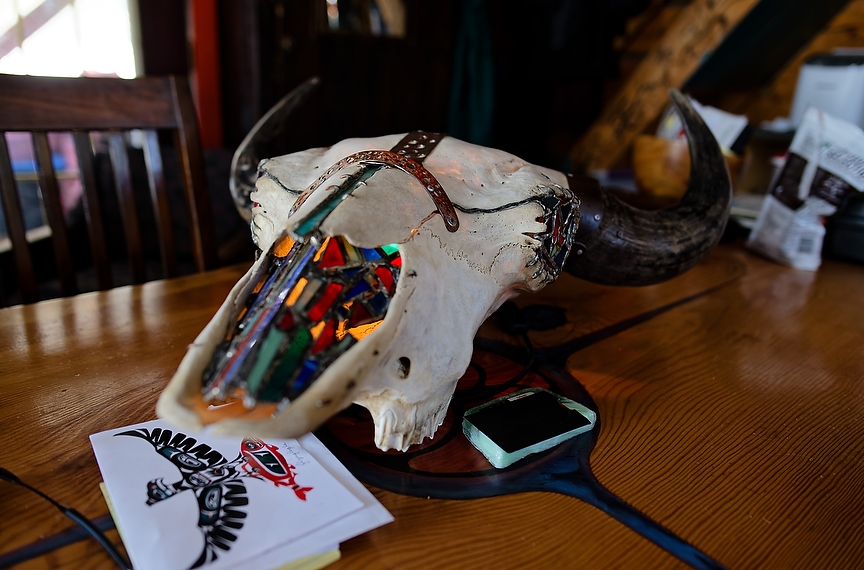
Sitting in the cabin his ancestors built and that he later added on to, Karl Mattson gestures to strips of metal that are adhered to a bull’s skull on the table—it came from an old combine, he said.
He plugs in the cord, and the skull lights up with light shining through the welded stained glass in the eye sockets.
”You can see where the light shines through the nasal cavity,” he said, gesturing to the light spots shining through the skull. “It was unexpected, but pretty cool.”
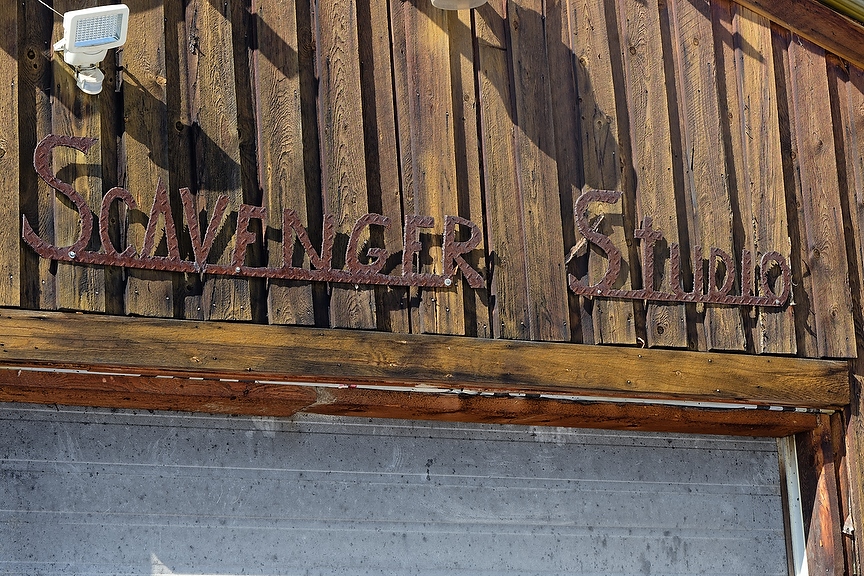
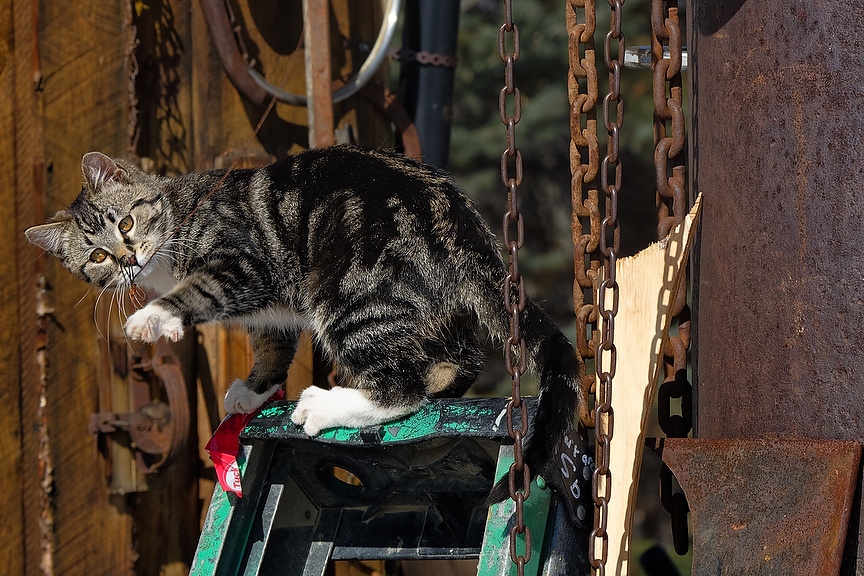
The skull came from an acquaintance who butchers cattle for food for dog teams. It’s how Mattson gets many of the materials for his art. Some are given to him by people who figure he can find some use for it — like the old diving helmet sitting outside the door of his studio — while the rest he scavenges himself from junk yards and the land itself.
“I’ve always been kind of a scavenger and interested in found objects and a collector. It really helps if you want to build things out of scraps to be a weird hoarder,” he said.
“Salvage is really fun to work with because you’ve got things that are already made … it’s fun to work with something that’s already been made for something you don’t even know about, but it just fits.”
Mattson has lived his entire life in Rolla, a tiny farming community of approximately 100 residents north of Dawson Creek. The Mattson family ranch has occupied the same area for generations.
His mother, renowned artist Emilie Mattson, encouraged her children to develop their creative side in between doing regular farm chores.
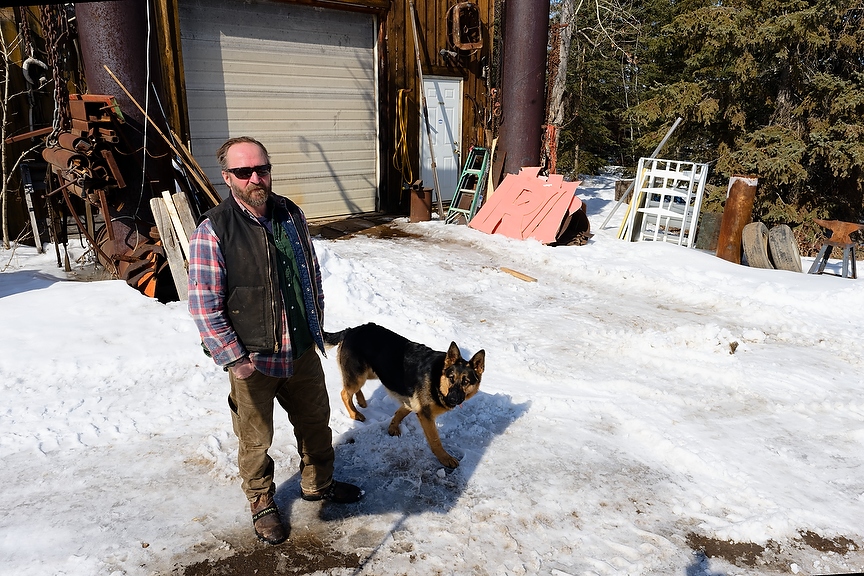
“I was fortunate to grow up having art be part of my life,” said Mattson.
“I was always allowed to be creative out here in the rural areas. I just assumed that making art and making things was something you can do. Luckily, I was raised by people who gave me that confidence.
“I think that’s an important part of how I became an artist, just that opportunity in being raised in an environment to make things. Not with a real clear understanding of what art is, but just being allowed to figure it out on your own.”
He started out working two-dimensionally, as most children do, but as he learned skills in school and on the farm — like welding — his work started becoming more elaborate and three-dimensional.
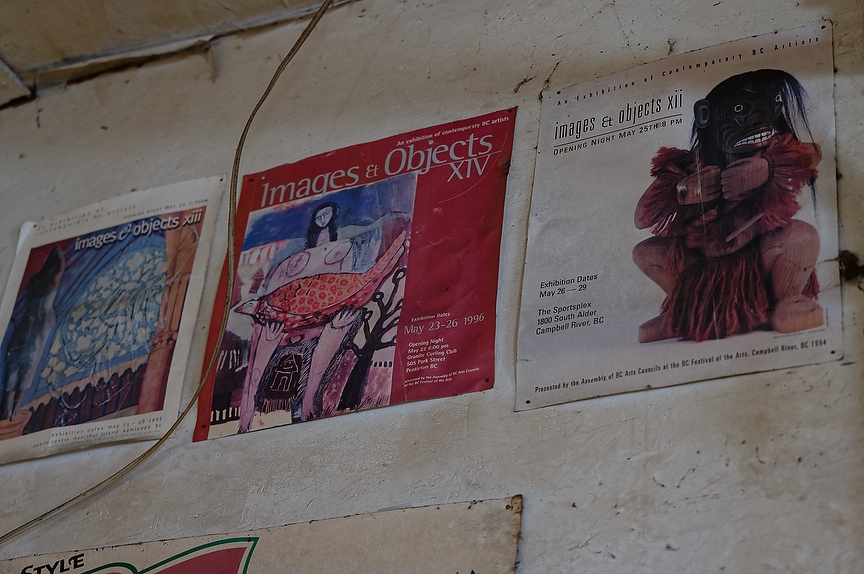
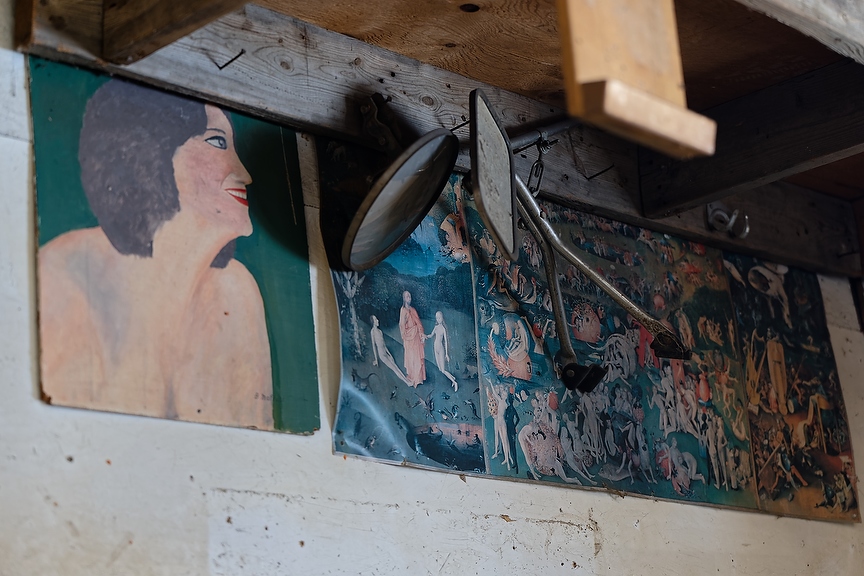
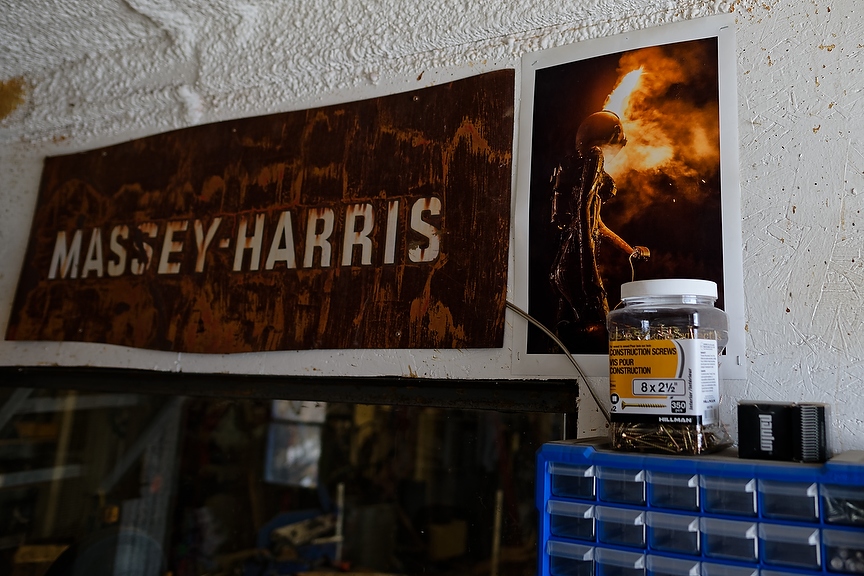
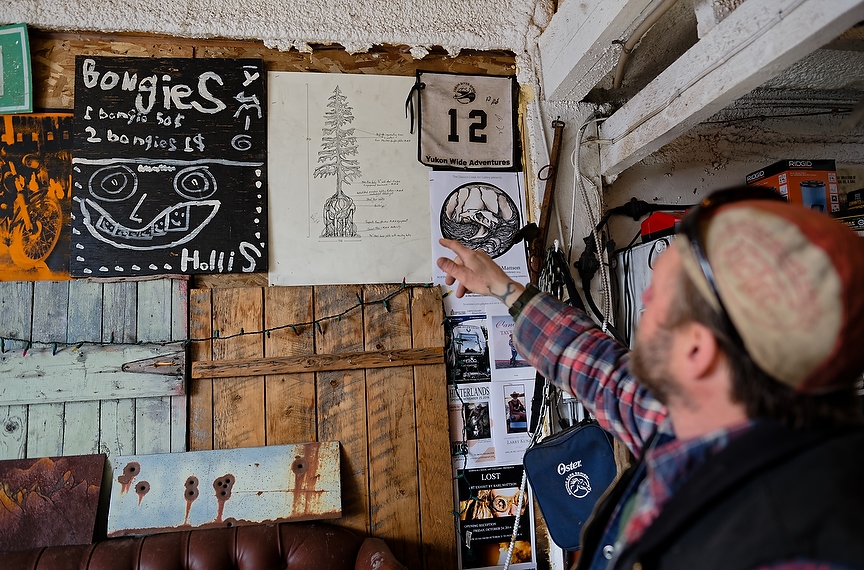
Mattson will start a project with a basic sketch before heading out to find the right pieces to bring it to life.
“It’s an interesting creative process because you can see the shapes you want to make it fit how you’re building,” he said.
“It’s really interesting to use pieces of steel that were built for something completely different, often you don’t even know what for, and you incorporate it into something that you want to create.”
Sometimes his best finds are the ones that aren’t necessarily perfect, but can be remade into the right piece.
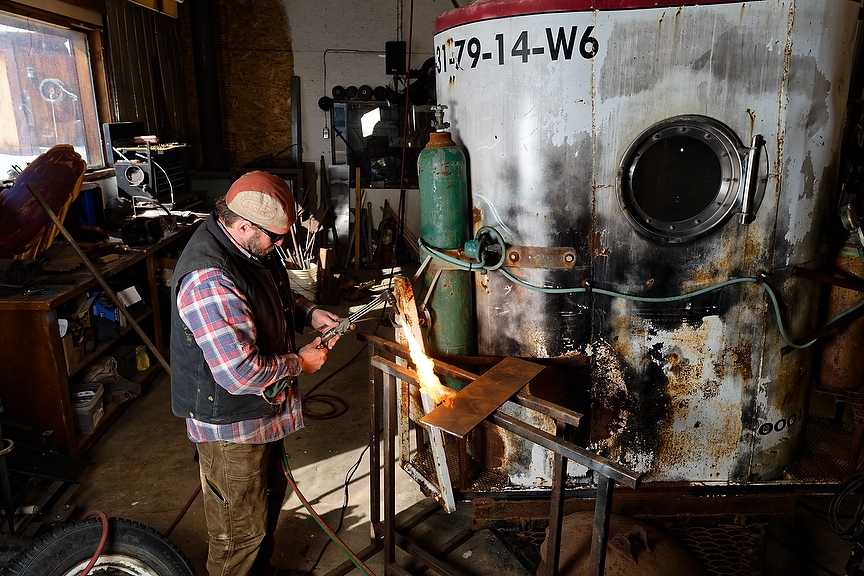
“The wonderful thing about metal sculpting is you can manipulate it; you can bend it, you can smash it, cut it, you can take it away and weld it back,” he said.
“It’s a really aggressive process to do with steel, but it’s really organic if you think of it that way — you can manipulate it forever and turn it into nothing and rebuild it.”
Mattson took an interest in reducing steel back to its basic form, so he built himself a mini forge using half of an old pottery kiln.
“I’ve done some work with the forge, like the hammering and bringing things right down to molten ore, which is a lot of fun, something I want to do more of.”
Mattson has also been working on mixing steel with stone in his sculptures over the last year, using steel to elevate the stone, which he says brings a kind of serenity to the work.
“There’s a really great symbiosis with stone and steel,” he said. “Steel is made from ore, which is stone, so I think aesthetically it’s really powerful.”
There’s a good chance people have seen Mattson’s work and didn’t realize it.
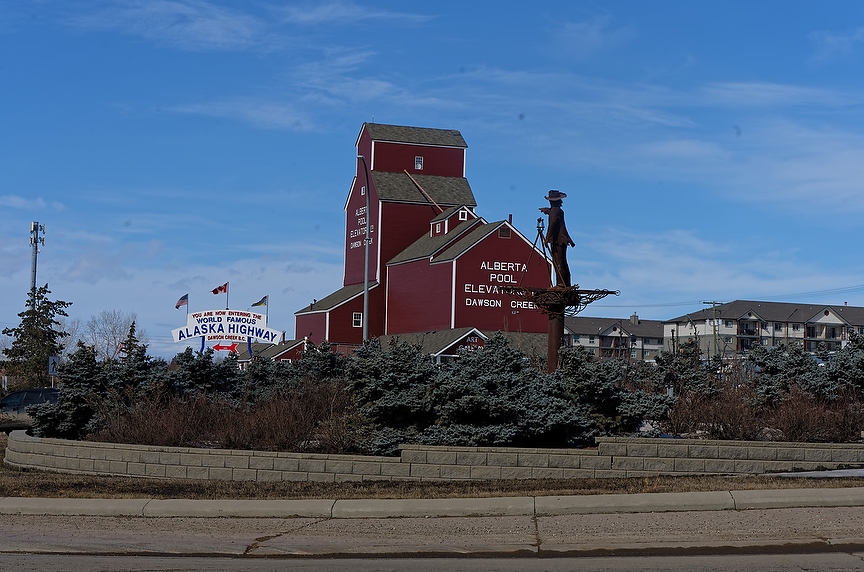
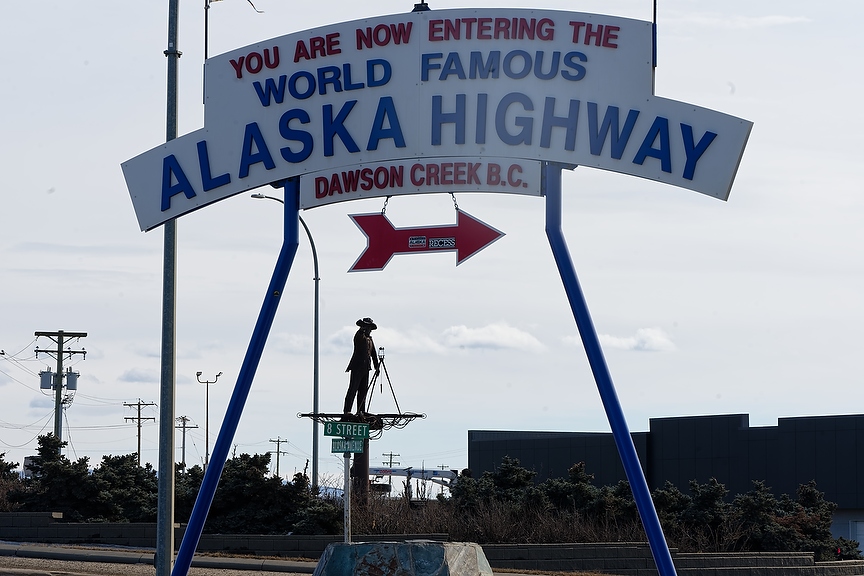
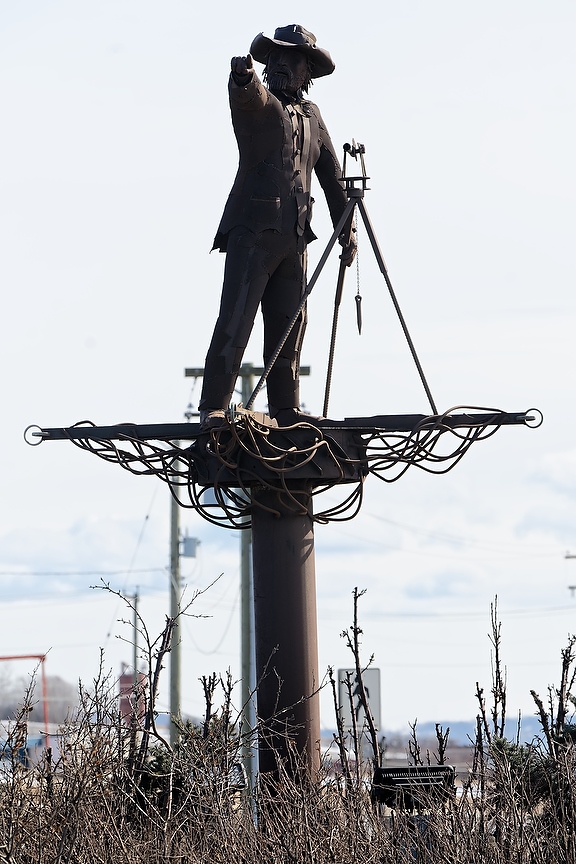
One of his commissioned sculptures is at the center of the traffic circle in Dawson Creek; another is outside the new hospital in Terrace, created using scraps of the old hospital; a collaboration with Luke Gleeson is on the University of Northern BC campus in Prince George, just to name a few.
“I’m enjoying [commissioned work] because I generally get to do what I propose, which is always a real bonus,” he said.
Mattson’s commissioned work allows him to make a living off his art, like the stained glass skull lamp, but it’s his personal work where he gets to make a statement as an artist.
Whether it’s a comment on the state of the world or the encroaching of the oil and gas industry on his family’s land, sculpture allows Mattson to really express his views in a way that speaking aloud may not.
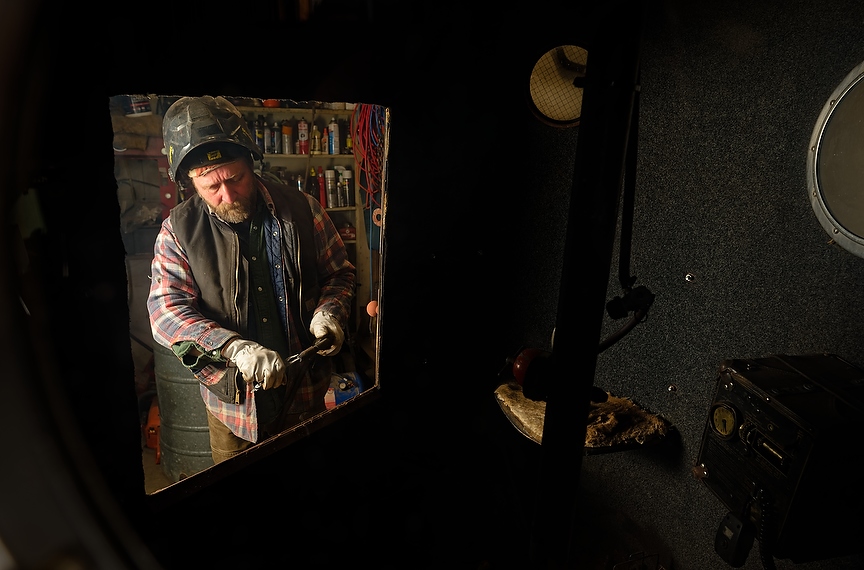
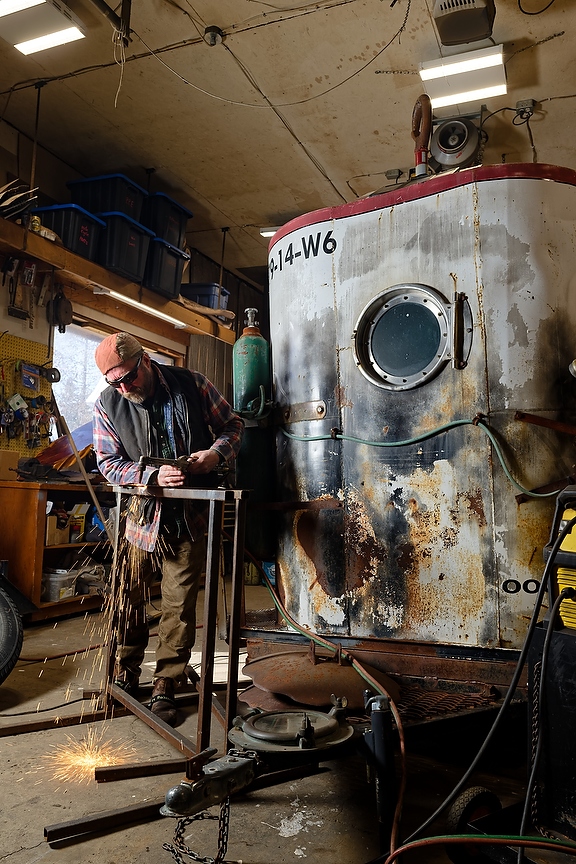
The Life Pod is one of those pieces. It’s an ever-evolving structure, one that was actually meant to be used by his family in case of a sour gas leak from a nearby wellsite.
“That piece is an environmental protest piece. I built it with help from some neighbours — we had a lot of fun doing it — out of a fuel tank and we added pieces and turned it into an above-ground bunker,” he said, noting that in the case of a sour gas leak, the pod could actually be used to keep people safe from poisoned air.
“It’s pretty bleak.”
Mattson has added to The Life Pod over the years, showing it all over B.C. and in Winnipeg. Now he’s taking it to Castlegar, where it will be on display for the next year, starting in May.
“It’s an old sculpture, but it’s timeless.”
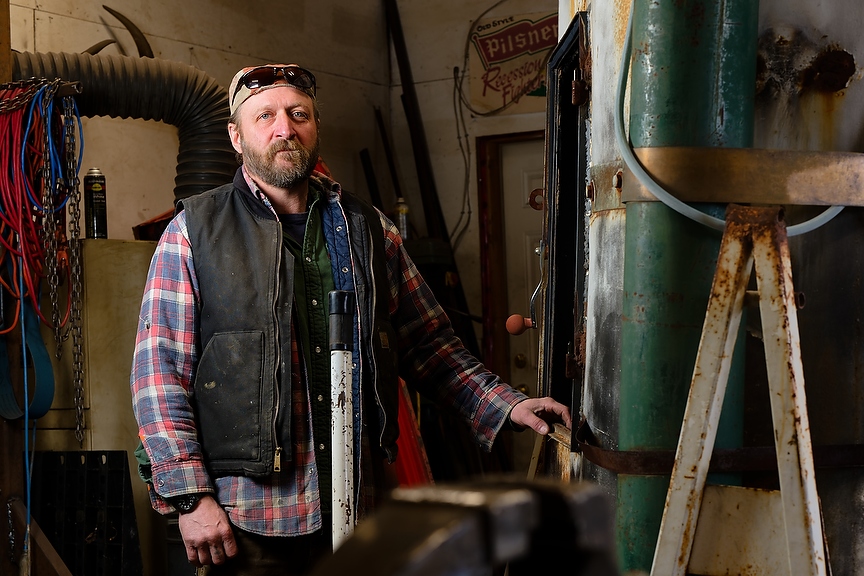
Sculpture is just one of the ways Mattson expresses himself. He’s also known for his painting, music, video, and writing work. A jack of all artistic trades, as it were.
“I often wonder if maybe I should have honed in on something and really attacked one particular thing, but I’m also of the mind that what’s wrong with trying to do everything?”
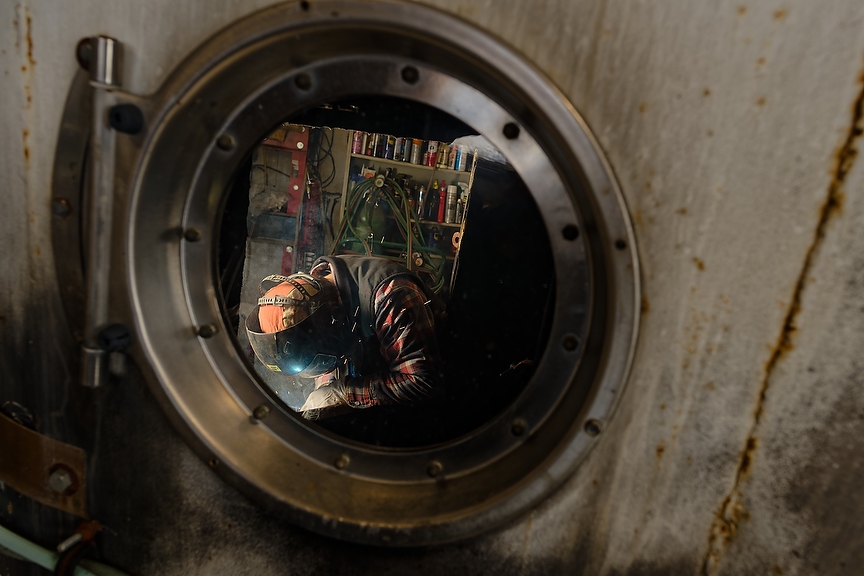
As an entirely self-taught artist, he strongly encourages anyone interested in creating to just take that first step and try, no matter the medium,
”Just start. Doesn’t matter how, just start creating.”




Follow Us